
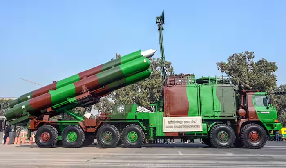

India’s aerospace and defence (A&D) sector is poised for a phase of rapid growth, driven by rising domestic demand, growing exports, and strong government support, according to a new report by PwC India. However, the industry’s ability to efficiently execute large orders may determine its ability to sustain this momentum, as per the report titled ‘Accelerating Aerospace and Defence Manufacturing through Operational Excellence and Supply Chain Resilience’. The report was launched at the ET Aerospace & Defence Manufacturing Summit 2026 in Bengaluru.
According to the study, the sector is expected to play a crucial role in India’s aspiration to become a USD 30 trillion economy by 2047, while significantly contributing to the expansion of the country’s manufacturing base. The report comes at a time when India’s defence production has hit record levels. Domestic defence manufacturing hit Rs 1.54 lakh crore in FY25, while Indian-made defence products are now being exported to nearly 100 countries.
Despite the strong demand outlook, manufacturers are facing increasing pressure to deliver on growing order books. PwC noted that major defence companies currently have order book-to-revenue multiples ranging from 1.71 times to 6.88 times, creating execution backlogs of between two and seven years. In some segments, existing orders could take as long as five to ten years to complete.
The report said the industry’s biggest challenge is no longer generating demand but ensuring timely execution of projects at scale. The report identified six areas of priority for transformation to meet these challenges: supply chain efficiency, operational excellence, planning and governance, accelerated research and development, workforce productivity and digital integration.
Strengthening these areas would help manufacturers to improve productivity, reduce inefficiencies, build stronger supply chains and achieve globally competitive delivery standards, the study said. According to PwC India, the next phase of growth would depend on the sector’s ability to deliver projects with speed, consistency and precision while expanding operations. The companies that invest in modern manufacturing processes, stronger planning systems and digitally connected supply chains would be best placed to convert their large order pipelines into timely, high-quality output.
The report concludes that operational excellence and supply chain resilience will be critical if India is to transform its aerospace and defence industry into a globally competitive manufacturing powerhouse.
The findings come amid the government’s continued push for self-reliance in defence production. Defence Minister Rajnath Singh on Sunday highlighted India’s growing indigenous manufacturing capabilities, saying most defence equipment is now being produced within the country. Speaking at a ‘Prabuddhjan and Varishthajan Samvaad Kaaryakram’ in Lucknow, Singh said India remains resilient despite global uncertainties.
“India remains in a strong position despite global challenges and international crises. Under the leadership of Prime Minister Narendra Modi, the country is moving forward with confidence, and India’s head will not be allowed to bow down under any circumstances,” he said.
The Defence Minister said India’s international standing has strengthened in recent years and that the benefits of welfare schemes are reaching the last person in society.
Highlighting progress in the defence sector, Singh said domestic production continues to rise steadily, with most military equipment now being manufactured indigenously. The Lucknow MP also pointed to the city’s emergence as an important defence and research hub.
“Several defence-related units, including the BrahMos missile project, have been promoted. The expansion of DRDO laboratories is providing opportunities for research and innovation to the youth,” he said.
Singh further cited improvements in infrastructure and law and order in Uttar Pradesh, noting that five international airports have been built in the state and that major projects, including the Lucknow-Kanpur Expressway, are expected to be launched soon.
Referring to India’s entrepreneurial ecosystem, he said the country now has around two lakh start-ups and that unicorn companies reflect India’s growing economic strength.
During the programme, members of the Sikh community urged the government to introduce either a direct flight service or a Vande Bharat train connecting Lucknow and Amritsar.