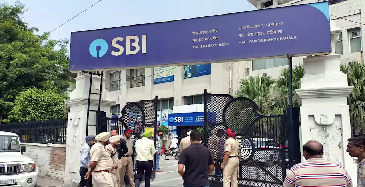

India’s largest public sector lender State Bank of India (SBI) on Thursday clarified that the recent cash withdrawal services revision made by the bank. Digital transactions continue to remain free without any restrictions and are not included in the limit of up to four withdrawals, SBI has said.
“State Bank of India has revised the cash withdrawal charges, effective 1st October 2026, for Basic Savings Bank Deposit (BSBD) Accounts opened through Branch Channel. Four cash withdrawals in a month will continue to be free and cash withdrawal transactions beyond four in a month will attract a charge of Rs 15 + GST per transaction. Customers are requested to take note that all digital transactions will continue to be free without any restriction,” the bank said in a post on X.
Additionally, State Bank of India has revised its policy regarding Aadhaar Enabled Payment System (AePS) transactions, removing the previous rule that excluded them from the monthly calculation of four free transactions.
SBI achieved a 10.23 percent year-on-year increase in net profit for the first quarter of FY27, driven by a surge in interest income, robust expansion in loans, and a significant drop in provisions for bad loans.
Consequently, the bank’s net profit reached Rs 21,121 crore for the April-June quarter, up from Rs 19,160 crore during the same period of the previous financial year.
SBI’s operating profit climbed by 9.8 percent to hit Rs 33,529 crore, while its net interest income experienced a strong 14.9 percent growth to finish at Rs 46,992 crore.
SBI chairman CS Setty had recently said that the bank is accelerating the adoption of artificial intelligence across its operations, with the country’s largest lender planning to shift its entire cheque processing system to AI in a move aimed at improving efficiency and reducing manual intervention.
Speaking at a press briefing after the bank’s quarterly earnings, SBI Chairman CS Setty said the lender is extensively deploying AI in critical back-office functions such as fraud prevention, proactive risk management, anti-money laundering (AML), and cheque processing.