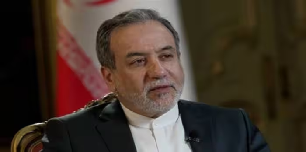

Iran Foreign Minister Seyed Abbas Araghchi presented Iran’s demands and voiced its concerns over US positions as Islamabad hosted renewed efforts in a bid to end a two-month long war that has claimed thousands of lives and unsettled global markets, news agency Reuters reported.
When asked about Tehran’s concerns regarding US positions in the talks, an Iranian diplomatic source in Islamabad told Reuters, “Principally, Iranian side will not accept maximalist demands.”
Meanwhile, Araqchi met Pakistan’s Prime Minister Shehbaz Sharif and other top officials. Although, only few details about the talks were disclosed.
Earlier, on Friday the White House had announced that the President Donald Trump’s special envoy Steve Witkoff and son-in-law Jared Kushner will visit Islamabad on Saturday for 2nd round of peace talks.
However, Iran has so far rejected any direct talks with the United States regarding negotiation and ceasefire. It is also remain uncertain if or when Araghchi would return to Pakistan, as he is already scheduled to visit Russia and Oman for bilateral talks. Araghchi himself confirmed regarding his visit to Muscat and Moscow.
Abbas Araghchi arrived in Islamabad on Friday. However, an Iranian foreign ministry spokesperson informed on X that the Araghchi’s visit intended to bilateral talks and Iranian official did not have any plan to meet US representative, adding Tehran’s concern will be present before Pakistan, actively playing a role of mediator in Iran-US ceasefire talks.
US Defence Secretary Pete Hegseth had earlier said that Iran has a very chance to make a “good deal.”
“Iran knows that they still have an open window to choose wisely,” he said. “All they have to do is abandon a nuclear weapon in meaningful and verifiable ways.”
Earlier, US delegation led by Vice President JD Vance was scheduled to reach Islamabad at the start of the week for the peace talks, however, Iran has rejected the negotiation talks with the US, citing Washington’s naval blockade of its ports near Strait of Hormuz.
US President Donald Trump imposed the blockade on April 13, just two days after the first round of peace talks between the US and Iran in Islamabad collapsed without any way forward.
Ever since, the prospects for further talks have remained uncertain, with Iran demanding that the United States must lift the blockade and then only it will return to negotiation table. Meanwhile, Trump has so far refused to lift blockade, even after Iran indicated that it would reopen the Hormuz.
The Middle East conflict, now under a fragile ceasefire, started with the US-Israeli joint airstrikes against Iran on February 28. In response, Iran has launched attacks on Israel and US military bases in Gulf countries. The war drove the energy prices to multi-year highs, fuelling inflation and clouding global economic growth.