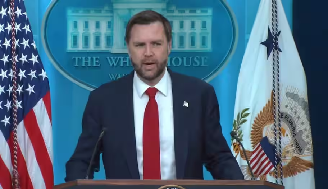

US Vice President JD Vance issued a pointed warning to critics of the Trump administration’s newly signed Iran agreement, arguing that attempts to undermine the deal risked squandering a rare chance to stabilise the Middle East after months of conflict. Briefing reporters at the White House, Vance pushed back firmly against criticism from some Israeli ministers and Republican lawmakers, insisting much of the backlash stemmed from a misreading of the deal’s actual terms.
“So much of what I’ve read or heard that people believe about this deal is just fundamentally untrue,” he said.
Lebanon at the centre of the conversation
Much of Vance’s briefing turned on Lebanon, where he said Washington was working to dial down hostilities between Hezbollah and Israel. “We expect Hezbollah is not going to be firing rockets and firing drones at the Israelis,” he said, while stressing the obligation cut both ways: “We also expect that the Israelis are not going to be going wild in Lebanon.”
He conceded that ceasefires in the region rarely mean a complete end to violence, recalling a line from President Trump himself: a ceasefire there “just means they’re shooting a little bit less at each other than they were before.” Even so, Vance maintained that hostilities had dropped sharply and that diplomacy was beginning to show results.
A blunt message for Netanyahu’s critics
Vance’s sharpest words were reserved for members of Prime Minister Benjamin Netanyahu’s coalition who have spoken out against the agreement. “Donald J. Trump is the only head of state in the entire world who is sympathetic to the nation of Israel at this moment in time,” he said. “The problem for Israel is not Donald J. Trump, and anybody in Israel who thinks their biggest problem is the president of the United States needs to wake up and smell the reality of the situation that country is in.”
He went further still: “If I was in the Cabinet of the Israeli government, I might not be attacking the only powerful ally that I have anywhere left in the entire world.”
Vance also pointed to the scale of US military backing during the conflict, noting that American-built, American-funded weapons had supplied two-thirds of Israel’s defensive arsenal over the past three months.
Reassuring sceptics in his own party
Turning to Republican doubters, Vance urged patience. “Have a little bit of faith in the President of the United States,” he said, adding that Trump had negotiated from a position of strength and retained the option to reimpose pressure should Iran fail to hold up its end. Dismissing suggestions the deal favoured Tehran, he called the idea “preposterous,” insisting Trump would never strike an agreement that left Americans worse off.
What the deal actually does
According to Vance, the agreement’s underlying purpose is to push Iran toward more conventional state behaviour and curb its backing of armed groups across the region. “What this agreement does fundamentally is it requires Iran to behave like a normal country,” he said. “And if they do, then that’s a great thing for everybody.”
He confirmed the military campaign preceding the deal had already crippled Iran’s missile capabilities. “We destroyed a substantial number of their ballistic missiles and their ballistic missile launchers themselves. The nuclear weapons program is destroyed. It is gone,” he said, framing the agreement as building on that military success rather than conceding ground.
On the question of self-defence, Vance was careful to note the deal doesn’t strip either side of that right. “Israel doesn’t give up the right of self-defence… The Iranians don’t give up the right of self-defence,” he said. “But we do expect that as part of the final deal, they are not going to be able to build the kind of missiles that can broadly threaten the entire world.”
The 60-day clock
Vance confirmed the negotiating window for a comprehensive final agreement formally began that day. “I would say the 60-day period officially started today. So, yes, the deal started yesterday. We’re going to start the 60-day clock today,” he said. Within that window, the two sides must settle terms on sanctions, frozen assets and the long-term shape of Iran’s nuclear programme.
Oil flowing again through the Strait of Hormuz
Vance pointed to early signs the deal was already paying off economically. He said Iran’s oil exports had been throttled not by sanctions but by the conflict-era blockade, and that lifting it was already shifting the picture. “We’re going to lift the blockade, we’re going to allow you to sell some of your oil, and they’re going to open the Strait of Hormuz. We see that process starting to work already,” he said.
He cited a sharp rise in maritime traffic, with 12.5 million barrels of oil passing through the Strait overnight, the highest volume recorded since the conflict began, alongside more than a dozen commercial vessels reaching Iranian ports under US Navy clearance.
“The president’s peace plan in Iran is already bearing real fruits for the American people,” Vance said, pointing to oil prices nearing pre-conflict levels and petrol prices dipping below $4 a gallon for the first time since fighting broke out. “They’re going to keep falling further given how low oil prices are,” he added.
Brushing off political risk
Asked about potential backlash on Capitol Hill, Vance said the administration would brief Congress shortly and waved away concerns about fallout. “I am ‘not at all’ worried,” he told reporters.
The 14-point framework calls for a permanent halt to fighting on all fronts, including Lebanon, while critics maintain that early sanctions relief and the release of frozen assets hand Tehran leverage without securing binding long-term guarantees.