
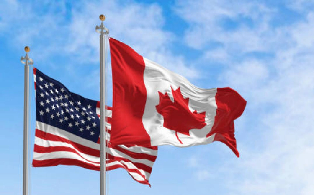

The United States and Canada reached a last-minute understanding on Tuesday to postpone President Donald Trump’s proposed 50 per cent tariffs on around USD 20 billion worth of Canadian goods, giving both sides additional time to work towards a wider trade agreement.
Trump had planned to bring the new duties into effect just after midnight. However, he announced on social media that the tariffs had been put on hold for three days while officials worked to complete the final paperwork.
Trump announces temporary pause
Trump said the decision followed late-stage discussions between Washington and Ottawa and described the development as a ‘DEAL’.
‘I have paused the 50% Tariffs against Canada, that were scheduled to kick in tomorrow morning for a three day period, based on the fact that Canada and the USA, subject to the finalization of documents, have a DEAL! The great Keystone XL Pipeline, long ago killed by Sleepy Joe Biden, may be awoken from the grave!’ Trump wrote on Truth Social.
The temporary pause prevents the immediate introduction of tariffs that could have affected roughly 5 per cent of Canada’s exports to the US.
Carney says more work remains
Canadian Prime Minister Mark Carney struck a cautious tone after Trump’s announcement, indicating that negotiations had moved forward but were not yet complete.
An hour after Trump announced the pause, Carney said in a statement that ‘substantial progress has been made, although there is important work still to be done’.
He added, ‘While we continue this work, Canada remains focused on building a stronger, more independent and more competitive economy at home.’
Carney’s remarks suggest that despite the temporary agreement, several key issues between the two countries remain unresolved.
Canadian goods were set to face higher costs
The proposed duties would have covered a wide range of Canadian products, including everyday and industrial goods such as hockey sticks and tongue depressors.
Canada had warned that it could respond with retaliatory tariffs, raising fears that the dispute could develop into a wider trade confrontation.
The latest disagreement comes as relations between the neighbouring countries remain strained. Trump has repeatedly suggested that Canada could become the 51st US state.
Trade ties make dispute costly
The economic relationship between the two countries is substantial. The US and Canada exchanged approximately USD 880 billion in goods and services last year, while around 330,000 people and goods worth about USD 2 billion cross their common border every day.
Canada has a particularly high dependence on the US market, with nearly 72 per cent of its goods exports heading south last year. At the same time, US businesses and consumers could also feel the impact if importers pass higher tariff costs on through prices.
Bigger trade issues remain unresolved
Trump invoked Section 338 of the US Tariff Act of 1930 to pursue tariffs of up to 50 per cent, accusing Canada of unfairly restricting US exports, including automobiles, alcohol and cheese. The provision has never previously been used.
Canada has a particularly high dependence on the US market, with nearly 72 per cent of its goods exports heading south last year. At the same time, US businesses and consumers could also feel the impact if importers pass higher tariff costs on through prices.
Bigger trade issues remain unresolved
Trump invoked Section 338 of the US Tariff Act of 1930 to pursue tariffs of up to 50 per cent, accusing Canada of unfairly restricting US exports, including automobiles, alcohol and cheese. The provision has never previously been used.
The negotiations are taking place alongside discussions on the US-Mexico-Canada Agreement, the North American trade framework governing commerce between the three nations.