
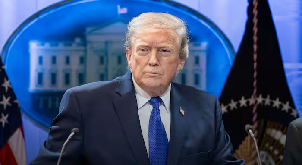

US President Donald Trump has canceled plans to attend his son’s wedding, signaling growing concern within the US administration over a possible new military conflict with Iran. The move comes as a fragile ceasefire between the United States and Iran appears close to collapsing, raising fears of fresh strikes and wider regional instability.
The White House confirmed that Trump will not attend the wedding of his son Donald Trump Jr. to Palm Beach socialite Bettina Anderson. Trump cited “circumstances pertaining to government” in a Truth Social post and told reporters that the timing was “not good” because of “a thing called Iran and other things.” He was originally scheduled to spend the Memorial Day weekend at his New Jersey golf club.
US military on high alert amid possible Iran strikes
Reports citing sources with knowledge of US military planning say the Trump administration is preparing for a fresh round of strikes against Iran, though no final decision has been publicly announced. Several US military and intelligence officials have cancelled Memorial Day weekend plans after learning of heightened readiness. Trump cut short a speech in New York and returned to Washington on Friday evening.
Six weeks of fighting led to fragile ceasefire
The current crisis follows nearly six weeks of intense fighting in early 2026 involving the United States, Israel, and Iran. Iran retaliated by targeting US military facilities across the Gulf and imposing restrictions near the Strait of Hormuz, triggering alarm in global energy markets. Trump announced a ceasefire in early April and proposed peace negotiations, with a temporary truce taking hold around April 7–8.
Peace talks struggle, no clear breakthrough
Indirect talks involving Pakistani mediators have taken place, but they have produced no major breakthrough. The United States has pushed for direct negotiations, while Iran has insisted on indirect talks through intermediaries, preventing face‑to‑face US–Iran talks. Analysts describe the ceasefire as fragile, and the lack of progress has increased the risk of renewed military action on both sides.
Strait of Hormuz under pressure
The Strait of Hormuz remains the flashpoint of the crisis. The narrow waterway carries roughly 20 percent of the world’s seaborne oil trade, and any disruption there would send shockwaves through global markets. The US military continues to maintain a strong naval presence in the Gulf, with several American naval assets remaining in the region even after the USS Gerald R. Ford completed its extended deployment.
Iran submits broad peace proposal via Pakistan
Iran has submitted a peace proposal through Pakistani mediators that calls for an end to military operations, the removal of US sanctions, a withdrawal of American forces from the region, the release of frozen Iranian assets, and greater Iranian influence around the Strait of Hormuz. Iranian leaders have described their plan as essential, warning that further restrictions on shipping could affect operators linked to US‑backed initiatives such as “Project Freedom,” though the exact wording of a “14‑point plan” is not fully confirmed in public sources.