
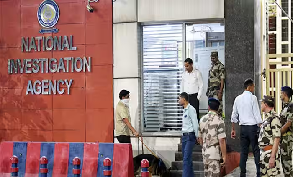

In the Red Fort blast case, the National Investigation Agency (NIA) has made several revelations in a 7,500-page chargesheet.
The NIA said in the chargesheet that the accused had planned blasts not only in Delhi but also in Lucknow. The remaining accused had also conducted reconnaissance of several important government installations in Lucknow.
According to the agency’s chargesheet, the terrorists used artificial intelligence platforms such as ChatGPT and YouTube to learn how to make bombs and rocket IEDs.
The NIA investigation found that the main accused, Jasir Bilal Wani, searched the internet for information on building rockets and making explosives, including queries on which chemicals to mix and in what quantities.
According to NIA sources, Jasir Bilal Wani also tested rockets and IEDs in the forests of Qazigund in Anantnag district of Jammu and Kashmir after developing them with the help of AI.
In the chargesheet, the NIA informed the court that the accused had been preparing to convert drones into weapons. They worked on enhancing the drones’ flight capability and payload capacity so that explosives could be attached and used to attack security installations.
The NIA investigation also revealed that the accused had ordered several electronic devices from online platforms such as Flipkart. These included sensors, remote control switches, soldering kits, and other equipment, which were used to build IED trigger systems.
Ansar Ghazwat-ul-Hind had planned major attacks in several cities across the country. To carry out their mission, the terrorists had devised a conspiracy named “Operation Heavenly Hind,” with the aim of executing large-scale terrorist attacks in the country.
Delhi blast case
On November 10, 2025, at around 6:52 PM, a white Hyundai i20 car exploded at a busy traffic signal near Gate No. 1 of the Lal Qila Metro Station, adjacent to Delhi’s historic Red Fort. The suicide bomber, Dr Umar Un Nabi, an assistant professor and doctor from a Kashmir background, died in the blast along with 15 civilians, and more than 30 people were injured.
The National Investigation Agency (NIA) probed it as a terror attack, linking it to a radicalized module allegedly inspired by groups like Jaish-e-Mohammed or Ansar Ghazwat-ul-Hind (an al-Qaeda offshoot). Several educated “white-collar” suspects, including doctors and professionals from Kashmir and nearby areas, were arrested.
The incident, Delhi’s deadliest in over a decade, triggered nationwide alerts and heightened security.