
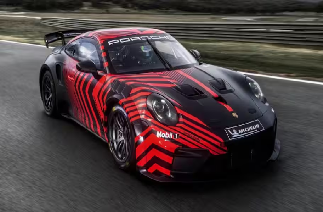

Porsche has officially revealed the new 911 GT4 R. This is the first time Porsche has built a GT4 racer using the 911’s platform rather than the 718 Cayman, which has been the basis for the existing GT4 RS Clubsport. According to Porsche, the 911-based GT4 R brings a more punchier engine, a wider track, and more advanced motorsport electronics to the table. It’s expected to start at USD 375,500 in the US and will hit racetracks during the 2027 motorsport season.
A new chapter in Porsche’s GT4 story
GT4 racing has been around since the mid-2000s, but Porsche only entered the category in 2016. Since then, the brand has built over 1,500 racers based on the 718 Cayman. The new 911 GT4 R is aimed at teams and drivers chasing higher performance benchmarks in global series like the ADAC GT4 and the GT4 European Series. Rather than replacing the Cayman-based car, the GT4 R will sit alongside it, giving teams a more powerful option to choose from.
Engine and performance
The 911 GT4 R uses a 4.0-litre flat-six engine that can produce up to 520 hp and 470 Nm. However, to comply with Balance of Performance (BoP) regulations in GT4 racing, the engine is fitted with 53.7mm airflow restrictors, which bring output down to 430 hp. Power goes through a 6-speed sequential dog-gearbox operated via paddleshifters, paired with a four-disc racing clutch.
Changes from the 911 Cup
Because of regulation requirements, the GT4 R differs from the 911 Cup in a few key ways. It gets narrower wheels, one inch slimmer, with a five-hole mounting pattern, along with dual-adjustable dampers and a choice of three spring rate settings. Additional ballast weights are also fitted, allowing the car to be classified across different weight categories as defined by BoP rules.
Aerodynamics and build
Several structural elements carry over directly from the 911 Cup, particularly the parts that improve aerodynamic performance. The standout feature is a large, manually adjustable rear wing that can be set across eleven different positions. To keep weight down, Porsche has used a natural fibre-reinforced plastic combined with epoxy resin for the doors, engine cover, and various aero components.
Interior
The same lightweight material extends into the stripped-out, race-spec cabin. There’s an integrated data logger paired with precise GPS tracking to help teams analyse and fine-tune performance during races. Beyond a carbon fibre steering wheel and a full roll cage, the cabin keeps things minimal, with just a 10.3-inch full colour digital display and a dash-mounted control unit for adjusting settings.