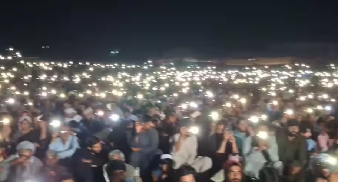

The ongoing protest movement in Pakistan-occupied Jammu and Kashmir (PoJK) entered its 17th consecutive day, with tens of thousands of demonstrators assembling at Rawalakot’s Eidgah Ground. Organisers estimate that more than 50,000 people participated in the gathering, making it one of the largest demonstrations witnessed in the region in recent years.
Led by the Awami Action Committee, the protests have continued despite restrictions and security measures imposed by the authorities. Demonstrators have raised concerns over economic hardship, governance issues, inflation, and what they describe as long-standing political marginalization.
Women and Social Media Voices Join the Movement
Women activists and social media influencers have emerged as prominent voices during the protests. In a widely circulated video, local social media influencer Ranima Shazma criticized the conduct of Pakistani authorities and security forces in the region.
“The Pakistani Army is acting against ordinary civilians and people are suffering. Pakistan has failed to address the concerns of the region,” she said, while calling for a reassessment of PoJK’s political future.
Addressing the gathering in Rawalakot, Awami Action Committee leader Sardar Aman Khan criticized Pakistan’s policies in the region and called for greater political autonomy. He stated that decisions regarding Kashmir should be left to the people of Kashmir and rejected what he described as externally imposed political structures.
Khan also questioned the legitimacy of the region’s electoral system, alleging that political representation does not accurately reflect public opinion.
Supply Concerns and Economic Pressure
Protest organizers have accused authorities of restricting the movement of essential supplies into the region. According to videos circulating online, trucks carrying food and other necessities have remained stalled for several days at entry points connecting Pakistan with PoJK.
Activists claim that these restrictions are contributing to shortages and increasing pressure on local communities already affected by the prolonged shutdown.
Action Against Government Employees
Documents circulating among protest groups indicate that disciplinary action has been taken against government employees accused of participating in demonstrations. According to these reports, 128 employees have been dismissed from service.
Protest leaders also allege that retired military personnel have been warned against joining the demonstrations, with concerns raised regarding pension-related consequences.
Casualties and Arrests
According to protest organizers, dozens of people have been killed during the unrest, while a large number of activists and supporters have been detained or booked under various charges. Authorities have maintained that action is being taken against individuals involved in activities deemed unlawful.
The scale of the protests has generated significant political debate within Pakistan. Speaking in Parliament, Defense Minister Khawaja Asif criticized the demonstrators and expressed frustration over the ongoing agitation, arguing that Pakistan had made considerable sacrifices for the region.
His remarks, particularly regarding the identity of the protesters, have triggered further controversy and criticism among activists.
Historical Context and Political Debate
The protests have also revived discussions about demographic changes, political representation, and governance in PoJK since 1948. Critics argue that successive governments have failed to adequately address local grievances, while supporters of the current administration reject such claims.
As the demonstrations continue into their third week, there is no indication of an immediate resolution. The developments are being closely watched across South Asia, with observers assessing their potential impact on regional politics and security.