
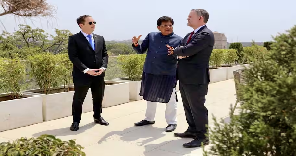

Union Commerce and Industry Minister Piyush Goyal has said India cannot move ahead with a trade deal with the United States unless it secures better tariff terms compared to its South Asian neighbours.
During an interview, he explained India’s position on how it wants the free trade agreement to develop before any final approval.
The minister said that the talks around tariffs have gone through changes. He said the tariff rate on India, which had earlier been at 50 percent, was brought down to 18 percent and placed below that of several neighbouring countries.
According to him, this adjustment had put New Delhi in a relatively stronger position, but the overall structure still needs clarity before a final agreement is signed.
The minister stressed that India is not only aiming to reach a deal with Washington, but also wants to ensure the country maintains an advantage when compared to other regional economies. He said India is seeking certainty on how its position will be protected if the agreement moves forward.
He also said that the negotiations initially began on the basis of lower tariff, but the situation has changed over time. According to Goyal, a recent US Supreme Court ruling has affected tariff-related decisions. He also said the 10 percent tariff window expired on July 24. These developments have changed the context in which the talks are taking place.
These developments, he said, have made it necessary to reassess the terms before any conclusion is reached. India, he said, wants to ensure that the agreement does not place it at a disadvantage when compared to other countries in the region that compete in similar export markets.
The comments come at a time when India and the United States are holding negotiating on trade and market access across sectors. While both sides have shown interest in widening economic ties, tariff structures have continued to be an important point in the negotiations.
Goyal’s statement makes clear that India is basing the progress of the deal on competitive parity with neighbouring countries rather than moving ahead on isolated tariff reductions. He maintained that the country’s position in regional trade flows will be an important factor in deciding how the agreement moves forward.
As talks continue, officials on both sides are expected to revisit the structure that was initially built on lower tariff expectations, now adjusted after recent legal and policy changes in the United States.