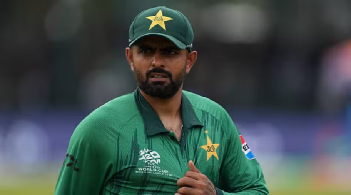

Pakistan’s white-ball head coach Mike Hesson has provided a candid assessment of the current international cricket landscape, describing Team India as not merely the top side but the best team by a mile when compared to the Pakistan squad.
Responding to intense public scrutiny regarding his leadership and the recent performances of the national team, Hesson strongly rejected the claim that Pakistan cricket is experiencing a downward slide. Defending his players against critics, Hesson highlighted the team’s highly competitive campaign in the previous year’s Asia Cup, pointing out that the squad secured victories in every single match of the tournament outside of their encounters against India.
Hesson is strongly pushing back against the idea that Pakistan cricket is in a state of continuous decline, as well as the claim that his appointment has failed to stop it. “In the Asia Cup last year, for example, we won every game except against India,” Hesson explained to Cricinfo. “The reality is every single team in the world is struggling to beat India at the moment. Every team, not just Pakistan. Rightly or wrongly, Pakistan are gauged by how they perform against India. And at the moment, India is not only the best team; they’re the best team by a mile.
On India
“Rightly or wrongly, Pakistan are gauged by how they perform against India. And at the moment, India is not only the best team; they’re the best team by a mile,” Hesson said.
“At the T20 World Cup, we lost to England in the Super 8 off the back of a Harry Brook hundred and a very tight game outside of that. We won every [other] game except India. From 2023-2025, we didn’t make it out of the pool in ICC events. So you can’t go from eighth in the world to all of a sudden competing unless you start winning more regular games of cricket. And for us to go from winning 20-odd per cent to close to three-quarters of our games in a year is significant.”
Emphasizing Development Over Instant Trophy Success
For a coach whose career journey has taken a highly distinctive route, the developmental process remains incredibly important. During the conversation, the national white ball and red ball training groups were participating in a summer development camp in Lahore despite an intense heatwave. The camp follows a year where the white ball results for the squad have moved upward, particularly within bilateral campaigns and tri nation tournaments. Since Hesson assumed leadership, the team has secured two T20I tri series trophies and suffered just a single defeat across six bilateral T20I series. While their ODI record has been slightly more varied, it still features series victories over South Africa, Australia, and Sri Lanka.
Although South Africa and Australia chose not to field their strongest available lineups, Hesson maintains that the team can only focus on managing their own displays and driving internal improvement. He acknowledges that there are numerous areas within the national setup requiring refinement.
“The reality is when someone comes new into a job, they very rarely take over a team at the top of their game,” Hesson remarked. “I took over Otago, [who] hadn’t won a trophy for 20 years, [and they] won trophies. New Zealand, we obviously made some improvements, also with RCB [Royal Challengers Bengaluru in the IPL] and things are moving in the right direction there. Pakistan is similar to New Zealand in many ways. But it will take time. It took probably two-and-a-half to three years from a white-ball perspective to really turn things around with New Zealand, and then there was some ongoing success for the next three or four years.
“But to do that you actually have to hold your nerve and in New Zealand it’s easier because there’s less players, you know, so the depth is less. You know in larger countries, bigger player pools, the ability to hold your never and focus your talent on a smaller group of players is hard, because it’s really hard to develop a hundred players. Far easier to develop 20.”
Franchise Differences and a Restructured Contract System
Hesson’s reputation grew within the country not only due to his international resume, but also because of his achievements during a two year tenure with Islamabad United. He took charge of the PSL franchise in 2024, guiding them to their first championship title in six years during his debut season. The cricket board was hunting for that exact type of rapid turnaround when they extended the job offer, following the early resignations of former overseas coaches Gary Kirsten and Jason Gillespie after disagreements with the leadership.
However, Hesson rejects the notion that a rapid shift in fortunes can be easily achieved at the international tier. “You can recruit in franchises,” he noted plainly. “The standard [between PSL and international cricket] is different. So to think that someone’s going to replicate what they do in PSL on the international stage in a variety of conditions, completely different pressures is very unrealistic.”