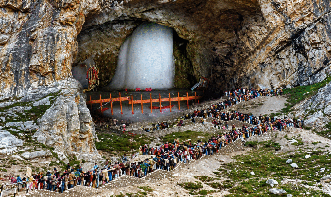

Jammu and Kashmir Chief Minister Omar Abdullah welcomed Prime Minister Narendra Modi’s appeal asking Amarnath pilgrims to spend at least 10 percent of their travel budget on local products, but questioned how visitors could follow that advice when they are effectively confined to buses and denied the freedom to move around.
“This is a good step; if they spend something here it will help us,” Omar told reporters in Srinagar. “But how will they spend money when they are kept inside buses like prisoners and are not allowed to roam?” He urged authorities to allow pilgrims greater freedom to visit local markets and interact with vendors so that shopkeepers, pony owners, artisans and small traders can benefit.
Abdullah’s comments come after Modi’s public appeal aimed at boosting local incomes during the 44-day annual pilgrimage to the Amarnath cave shrine, which draws tens of thousands of devotees from across the country. Local officials have cited security and crowd-management concerns for restrictions placed on pilgrims’ movements along the route.
Beyond the pilgrimage, Abdullah also addressed broader political controversies. He questioned the media and political backlash directed at him and his father, former chief minister Farooq Abdullah, for advocating talks with Pakistan and for signing related accords, saying comparable statements by Rashtriya Swayamsevak Sangh (RSS) leaders do not attract similar criticism.
“Former prime minister Atal Bihari Vajpayee wanted peaceful talks with Pakistan,” Omar said, invoking Vajpayee’s line that friends can change but neighbours cannot. “Why are Jammu and Kashmir’s local leaders branded anti-national for calling for dialogue when similar calls from RSS leaders do not cause a stir?”
On other local measures, Abdullah welcomed the government’s decision to withdraw a proposal to close Srinagar airport on Monday and Tuesday, calling the reversal a major relief for the tourism sector in Kashmir. He also praised the removal of Punjab’s mandi tax on J&K products as a corrective step toward redressing an injustice to the Union Territory’s traders and producers.