
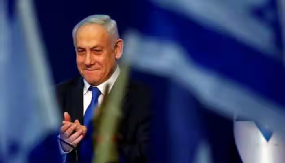

Israeli Prime Minister Benjamin Netanyahu has suggested that redirecting energy pipelines toward the Mediterranean could provide a long-term solution to address the vulnerabilities linked to the Strait of Hormuz.
In an interview with the Newsmax, Netanyahu said, “Long-term solutions include rerouting energy pipelines westward, across Saudi Arabia to the Red Sea and Mediterranean, bypassing Iran’s geographic choke point.”
The Strait of Hormuz continues to be one of the most vital energy transit chokepoints in the world, carrying roughly 20% of global oil exports, and is flanked by Iran on one side and Saudi Arabia, the United Arab Emirates, and Oman on the other.
Netanyahu highlighted that Iran’s geographic position enables it to pose a threat to global energy flows, especially during times of conflict.
“A military solution might offer short-term stability”, however, he suggested that a negotiated agreement or a structural change that reduces the Strait’s significance would prove more effective over the long term.
According to the Newsmax interview, Netanyahu indicated that developing alternative overland routes for oil and gas exports could eventually weaken Iran’s strategic leverage over global energy markets.
Meanwhile, Iran’s Parliament Security Committee on Monday (local time) approved the Strait of Hormuz Management Plan, which includes provisions to levy tolls on vessels transiting the strategic waterway, according to Iranian state media, Islamic Republic of Iran Broadcasting (IRIB).
As per the IRIB, a member of the National Security Commission announced that the plan had been formally approved, outlining key priorities such as security measures for the Strait, vessel safety, environmental protection, financial protocols, and the introduction of a rial-based toll system.
It also bars entry to American and Israeli ships, affirms Iran’s sovereign authority and that of its armed forces, and specifies cooperation with Oman to establish the Strait’s legal framework, while forbidding passage to vessels from countries enforcing unilateral sanctions against Iran.
The approved measures were unveiled against the backdrop of the ongoing conflict in West Asia between Iran and the US‑Israeli coalition, now in its second month, and signal Tehran’s attempt to tighten its grip on one of the world’s most vital maritime chokepoints, through which a large share of global oil exports moves.
Meanwhile, the White House on Monday claimed the recent movement of oil tankers through the Strait of Hormuz, despite a virtual blockage amid the West Asia conflict, stating it was a result of ongoing direct and indirect talks between the United States and Iran.
It credited diplomatic efforts led by US President Donald Trump.