
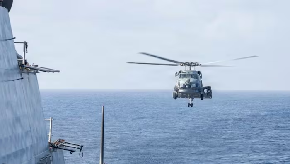

The United States Central Command (CENTCOM) stated that it carried out “self-defence” strikes on Iranian radar and command and control sites for drones in Southern Iran over the weekend. The military action was conducted on Saturday (local time) and Sunday (local time) in response to the reported shootdown of a US MQ-1 drone that was operating over international waters.
This comes as US President Donald Trump has reportedly asked for further amendments to a proposed agreement with Iran aimed at prolonging a ceasefire.
According to CENTCOM, the strikes targeted radar and drone control facilities in Goruk, Iran, and on Qeshm Island.
Strikes on Iranian radar, drone command sites
CENTCOM stated that US fighter aircraft responded “swiftly” to the incident, eliminating “Iranian air defenses, a ground control station, and two one-way attack drones” that it said posed “clear threats” to vessels transiting regional waters.
The command described the operation as “measured and deliberate”, emphasising that the strikes were carried out in self-defence.
“No American service members were harmed,” CENTCOM said, and added that it would continue to safeguard “US assets and interests in response to unwarranted Iranian aggression during the ongoing ceasefire.”
US MQ-1 drone shot down
Earlier, Iran’s Islamic Revolutionary Guard Corps (IRGC) claimed that its air defence units shot down a US MQ-1 drone after it
allegedly entered Iranian territorial airspace in the early hours of Sunday, according to the Iranian semi-official news agency Tasnim.
The statement said the aerial vehicle was immediately detected by the IRGC’s surveillance and air defence systems and was subsequently targeted by advanced air defence missiles. Iranian authorities claimed the drone was successfully destroyed.
The IRGC characterised the aircraft as belonging to the US Army and justified the claimed shooting down of the drone as it claimed that the drone entered with the “intention of carrying out hostile operations.”
US-Iran deal
According to reports, the newest draft incorporates a 60-day cessation of hostilities, measures to unlock the Strait of Hormuz, and a framework to resume negotiations on Iran’s nuclear programme.
However, an official agreement has not yet been declared. A high-level White House session held on Friday to reach a “final determination” concluded without any definitive resolution.