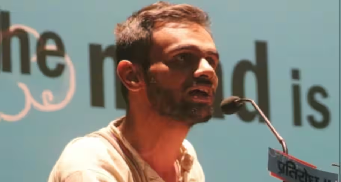

Jawaharlal Nehru University (JNU) has cancelled the booking of its School of Social Sciences (SSS-I) auditorium for a discussion on former student Umar Khalid’s book Fractured Communities: Adivasi Histories and the Politics of Power, citing the “non-disclosure of the full facts about the programme”. The discussion was scheduled for August 10 from 3 pm to 6 pm as part of an event marking the International Day of the World’s Indigenous Peoples.
In a statement posted on X on Sunday, JNU said, “The booking of the auditorium SSS-1 stands cancelled because of non-disclosure of the full facts about the programme.”
The university said JNU is a “democratic and decentralised institution” and that permission for the event had initially been granted by the Dean of the School of Social Sciences, who later took action to cancel the booking.
The university has not clarified which details of the programme were allegedly withheld. The event poster listed Professor Prabhu Mohapatra, Professor Uma Chakravarti, Shuddhabrata Sengupta, Harsh Mander and Banojyotsana Lahiri as speakers. The booking record also named Professor Avinash Kumar as the faculty representative. The auditorium booking was confirmed on August 7.
Khalid, a former JNU student, is the author of Fractured Communities, a work examining Adivasi histories and the politics of power.
JNUSU condemns cancellation
The Jawaharlal Nehru University Students’ Union (JNUSU) condemned the cancellation, describing it as an “arbitrary” and “authoritarian” decision by the administration.
The students’ body said discussions on books were a fundamental part of academic life and democratic engagement at a university.
“By cancelling the venue for this event, the JNU Administration has once again exposed its anti-student and anti-intellectual agenda, one that seeks to suppress critical thought and silence dissenting voices rather than foster the free exchange of ideas that a university is meant to protect,” the JNUSU said.
Questioning the administration’s explanation, the union said the claim that “full details” had not been disclosed was contradictory because, according to the students’ body, the Dean of the School of Social Sciences had himself instructed that the booking be made in that format.
“This contradiction lays bare the administration’s true intent: to manufacture a pretext for censorship,” it said.
The JNUSU also alleged that the administration was applying its rules selectively, referring to an ISKCON programme that was recently cancelled following objections from the students’ union over alleged violations of university rules concerning the use of campus facilities by religious organisations.
The union claimed that the same administration had previously provided “full cooperation and space across campus for ISKCON events”, and said the alleged disparity raised questions over the administration’s approach to academic freedom.
The JNUSU further described Fractured Communities as a serious academic work dealing with Adivasi resistance and struggles over “Jal, Jungle and Jameen”, and alleged that cancelling the discussion reflected an “Admin anti-Adivasi ideology”.
The students’ union also referred to a recent investigative report by journalist Alok Rajput, published by the Reporters’ Collective, which raised questions about faculty appointments at the levels of Associate Professor and Professor during the tenure of the current Vice-Chancellor. The report alleged that some appointees did not meet the minimum requirements relating to teaching experience and publications specified in the original advertisements.
JNUSU said it would continue with the discussion despite the cancellation of the auditorium booking.
“However, let it be clear: cancelling a room does not cancel a conversation. No administrative order can suppress the right of students to think, question, and discuss,” the union said.
It called on students, faculty and staff to support the event and said the discussion would be held outside the SSS-II building in the open.
“Come in large numbers. Defend your right to know, to read, and to discuss,” the union said.