
Tensions between Israel and Iran escalated sharply on Monday, with both sides exchanging pointed remarks over the growing threat of a blockade in the Strait of Hormuz. The situation took on an unusual tone after Iran issued a cryptic “mathematical warning” about surging oil prices, only to be mocked by Israel as little more than rhetorical posturing.
Iran’s Parliament Speaker, Mohammad Bagher Ghalibaf, delivered the warning in a post on X, cautioning the United States about the economic consequences of a potential blockade. He urged Americans to “enjoy the current pump figures,” adding that they could soon become “nostalgic for $4–$5 gas.” To emphasize his point, he included the formula “ΔO_BSOH>0 ⇒ f(f(O))>f(O),” where O represents oil prices and BSOH refers to a blockade of the Strait of Hormuz. The expression suggests that not only would a blockade drive oil prices up, but secondary effects would amplify the increase even further, triggering a broader economic shock.
Israel dismissed the warning with a taunt, responding that “you can’t execute a blockade by posting on X.” In a post on X, the Iranian Embassy in Sierra Leone said, “You know you can’t execute a blockade by posting on X, right? Like you have to actually bring your ships closer!”
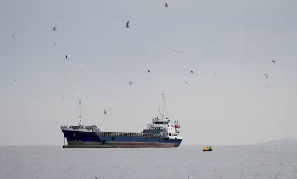
The exchange comes amid rising geopolitical strain following a US military announcement that it would begin a blockade of Iranian ports and maritime traffic in and around the Strait of Hormuz. The move has heightened concerns about global energy supplies, given the strategic importance of the waterway.
China calls for restraint
China, meanwhile, called for restraint and emphasized the importance of keeping the passage open. “Safeguarding the security, stability, and unimpeded passage in the Strait of Hormuz serves the common interests of the international community,” said Chinese foreign ministry spokesperson Guo Jiakun, according to Xinhua. Addressing separate tensions with the United States, he added that “tariff wars have no winners,” in response to threats of tariffs tied to alleged Chinese support for Iran.
These developments come at a critical diplomatic moment, as US President Donald Trump is expected to visit Beijing in mid-May for a high-stakes summit with President Xi Jinping. The trip had originally been scheduled for early April but was postponed, with Trump citing the need to remain in Washington “to oversee the Iran war.”
Middle East War
The US-Iran war began on February 28 when the United States and Israel launched a surprise joint strike on Iran that killed Supreme Leader Ayatollah Khamenei and several other senior leaders. Iran retaliated with attacks on US bases in the region and by closing the Strait of Hormuz to vessels from countries it considers hostile, while allowing passage only to a few friendly nations: China, Russia, India, Iraq, and Pakistan.
Although a two-week ceasefire was announced last week and peace talks were initiated in Pakistan, negotiations have so far failed to yield any meaningful progress, leaving the region on edge as tensions continue to simmer.