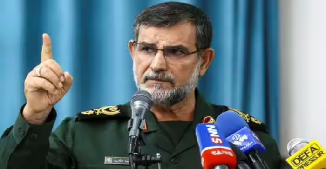

In yet another setback for Iran, Alireza Tangsiri, a senior figure in Iran’s naval command, has reportedly been killed in a strike in the strategically vital Strait of Hormuz. The incident comes amid heightened tensions in the region, though details surrounding the strike, including responsibility and circumstances, remain unclear.
This comes amid Iran’s blockade of the strait following a joint strike against Tehran by the US and Israel. Tangsiri was appointed as the IRGC Navy chief in August 2018 by Iran’s then Supreme Leader Ayatollah Khamenei.
Alireza Tangsiri had played a crucial role in regulating the Strait of Hormuz and carrying out a strike against US warship USS Abraham Lincoln. The development was confirmed by an Israeli official who said that the commander of the Islamic Revolutionary Guard Corps (IRGC) Navy was killed in a strike in Bandar Abbas.
Alireza Tangsiri had decades of experience and he had served during the Iran–Iraq War as well. He later rose through the ranks of the IRGC to become Navy chief.
Notably, the IRGC Navy specialises in asymmetric naval warfare. They carry out attacks using fast boats, missiles, and control the strategic waters like the Strait of Hormuz.
Iran is yet to react to the development.
Notably, the blockade of the Strait of Hormuz has impacted global energy supplies with many nations facing a shortage of oil and gas. Many nations negotiated the safe passage for their ships with Iran and Tehran granted access to five selected countries – India, Russia, China, Pakistan and Iraq.
The attack came at a time when the United States said it is intensifying efforts to secure the Strait of Hormuz and stabilise global oil flows. The White House said on Thursday that its operations are focused on protecting energy routes critical to the global economy.
White House Press Secretary Karoline Leavitt told reporters that US forces are targeting Iran’s ability to threaten shipping through the strategic waterway, a vital transit point for global energy supplies. “Our military also remains laser focused on eliminating the regime’s threat to the free flow of energy through the Strait of Hormuz,” she said.
As part of that effort, US forces struck Iranian military infrastructure along the coastline of the strait. “Over the weekend, we dropped several 5,000-pound bombs on an underground facility used to store equipment, including anti-ship cruise missiles and mobile missile launchers,” Leavitt said.
The Israel-US’ joint operations against Iran have entered the 27th day on March 26, with Tehran continuing its counter-offensive against Israel.
The Strait of Hormuz, located between Iran and Oman, is one of the world’s most critical energy chokepoints, handling a significant share of global oil and gas shipments. Any disruption in the strait can have immediate consequences for international markets, including major importers such as India.