
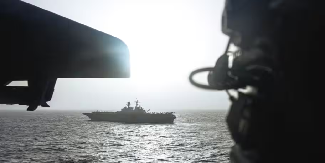

Iran has dismissed reports claiming that the Strait of Hormuz has been closed again, even as social media posts and some reports suggested that the Islamic Revolutionary Guard Corps Navy (IRGC-N) had ordered vessels not to enter the strategic waterway. The claims surfaced amid heightened tensions in the Middle East following Israeli military actions in southern Lebanon. The reported closure quickly sparked concerns about global shipping, energy supplies, and regional security due to the Strait’s importance to international trade. A widely circulated social media post alleged that the IRGC-N had warned all vessels against attempting to cross the Strait of Hormuz and threatened action against ships that ignored the directive.
Iran issues warning to vessels
According to the reports, the IRGC-N broadcast a message over maritime radio channels stating that the Strait would remain closed until several conditions were met. These reportedly included Israel’s withdrawal from Lebanon, the lifting of the naval blockade, and the withdrawal of US forces from the Persian Gulf and the wider region.
The message further warned that vessels attempting to cross the waterway could be targeted.
Iran’s Islamic Revolutionary Guard Corps Navy (IRGC-N) has once again closed the Strait of Hormuz, warning all vessels to not attempt to cross, following Israel’s refusal to withdraw from and strikes this morning on Southern Lebanon, with the following message being broadcast on… pic.twitter.com/MPcDbzDvp9 — OSINTdefender (@sentdefender) June 19, 2026
However, Iranian authorities have since pushed back against the reports. According to Iran International, Tehran denied that the Strait had been closed and maintained that maritime traffic through the crucial shipping lane remains operational. Iran also said that a planned meeting in Switzerland had been “postponed to another time.”
Strait of Hormuz reopened after US-Iran agreement
The reports emerged only days after US President Donald Trump and Iranian President Masoud Pezeshkian reportedly signed a 14-point memorandum of understanding (MoU) aimed at easing tensions between Washington and Tehran.
The agreement was said to include the reopening of the Strait of Hormuz, the launch of negotiations over Iran’s nuclear programme, and a framework for phased sanctions relief. The memorandum reportedly came into effect immediately after being signed by both leaders.
What the US-Iran MoU includes
The reported agreement outlines a 60-day process for negotiating a broader deal, with the possibility of extending the timeline by mutual consent.
Key provisions reportedly include:
- Reopening the Strait of Hormuz
- A halt to military operations covered under the agreement
- Discussions regarding Iran’s enriched uranium stockpile
- A framework for phased economic and sanctions relief
- Continued negotiations toward a long-term agreement
Iran says maritime passage remains secure
Earlier, Iranian Foreign Ministry spokesperson Esmaeil Baghaei had stated that maritime passage through the Strait of Hormuz would remain safe while preserving Iran’s sovereignty over the waterway.
The claims of a renewed closure therefore appeared to contradict Iran’s earlier position, prompting further scrutiny of the reports.
Why the Strait of Hormuz matters
The Strait of Hormuz is one of the world’s most strategically important maritime chokepoints. A significant share of global oil and natural gas exports passes through the narrow waterway each day.
Any disruption to traffic in the Strait can affect energy prices, shipping costs, and broader economic stability, making developments in the region closely watched by governments and markets worldwide.
Regional tensions remain high
The reports regarding the Strait surfaced against the backdrop of renewed tensions linked to developments in Lebanon. While Iran has denied that the waterway has been closed, the situation continues to attract international attention due to the potential implications for trade, diplomacy, and regional security.
Governments, energy markets, and shipping companies are expected to continue monitoring developments closely in the coming days.