
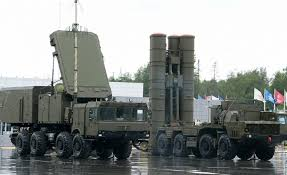

The world is currently caught in the West Asia crisis. The war involving Iran, Israel, and the United States has taught many lessons to countries across the globe. During the conflict, Iran’s missile attacks challenged American dominance, as its well-known defense systems like THAAD and Patriot struggled to perform effectively. However, Iran also suffered heavy destruction due to intense bombing by Israel and the US. Even so, the limitations of these defense systems have raised serious questions about America’s military superiority.
India’s Focus: The Shaurya NG Missile
Now, let’s talk about India. India is preparing to test a missile that can reportedly evade not only THAAD and Patriot but also advanced systems like the S-400. This missile is called Shaurya NG, developed by DRDO.
It is a hypersonic missile designed to meet India’s strategic needs, especially considering threats from China and Pakistan. While countries like the US, China, and Russia already have hypersonic weapons, Shaurya NG is specifically tailored for India’s defense requirements.
Key Features of Shaurya NG
The original Shaurya missile was first tested in 2008. It has a range of 700 to 1900 kilometers and can travel at speeds of Mach 7.5 or higher. The new NG version improves range, accuracy, and survivability. DRDO is preparing for its test in 2026.
How It Evades Enemy Air Defense
The biggest strength of Shaurya NG is its speed and maneuverability. It travels at around 2.5 kilometers per second. Unlike traditional ballistic missiles, it does not go into outer space. Instead, it flies at an altitude of about 50 kilometers within the upper atmosphere. It can change its path mid-flight and moves in a zigzag pattern like a snake.
In the final 30–60 seconds, it can make sharp turns, making it extremely difficult for enemy defense systems to intercept it.
At such high speeds, a plasma layer forms around the missile, which absorbs radar signals. To overcome this challenge, DRDO has equipped it with an indigenous multi-mode sensor that combines active radar and imaging infrared technology. This allows the missile to track its target even through the plasma layer.
It also uses cold launch technology, where the missile is first ejected from a canister using gas before the main engine ignites. This makes the launch safer. The system can be deployed on a mobile platform and made ready for attack in less than five minutes.
Challenge to THAAD, Patriot, and S-400
Most air defense systems are designed to intercept traditional ballistic missiles that follow predictable paths. Shaurya NG is designed to defeat these systems.
- THAAD: Built to intercept high-altitude missiles, but Shaurya NG stays at lower altitudes and uses unpredictable maneuvers.
- Patriot (PAC-3): Effective against low-altitude threats, but Shaurya NG’s high speed and sudden movements reduce its reaction time.
- S-400: One of the world’s most advanced systems, capable of intercepting very fast missiles. Still, Shaurya NG’s unique trajectory, altitude, and plasma shield can confuse its radar, leaving only 9–10 seconds for a response.
Comparison with China’s DF-17
Shaurya NG is often compared with China’s DF-17 hypersonic missile, which has been operational since 2019 and has a range of 1800–2500 kilometers. However, the two are different. Shaurya NG is a quasi-ballistic missile that behaves like a cruise missile within the atmosphere. In contrast, DF-17 uses a hypersonic glide vehicle that descends from high altitude.
Shaurya NG offers greater maneuverability and can be launched from both land and sea. It is designed to target high-value military assets along the borders with China and Pakistan.
Strategic Importance for India
Shaurya NG is a fully indigenous system. It uses an advanced inertial navigation system with a ring laser gyroscope, providing accuracy of 20–30 meters. It can carry both nuclear and conventional warheads. This development strengthens India’s self-reliance in defense under the “Atmanirbhar Bharat” initiative. When tested in 2026, Shaurya NG will demonstrate that India is keeping pace in hypersonic warfare.
It is not just fast, it is also highly intelligent, capable of penetrating even the most advanced enemy defense systems.