
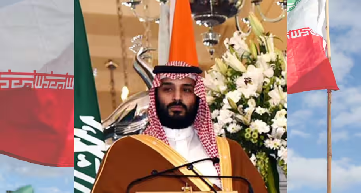

Iran has hit out at Saudi Arabia over its newly signed joint defence agreement with Turkey and Pakistan, warning Riyadh that seeking security through external alliances may not provide the protection it expects.
Iranian parliamentarian Ebrahim Rezaei, a member of the Parliament’s National Security and Foreign Policy Commission, took a direct swipe at Saudi Arabia following the signing of the ‘Mecca Joint Defence Agreement’.
In a post on X, Rezaei said, “Saudis must know that a paper agreement with Turkey and Pakistan will not bring them security, just as years of one-sided nursing to the Americans did not bring them security. Reform your policies so that you do not need to beg for security from others.”
He urged Riyadh to change its policies so that it would not have to “beg for security from others”, turning the new defence pact into the latest point of friction between Tehran and the Saudi leadership.
The comments came after Saudi Arabia, Pakistan and Turkey signed the trilateral agreement on Friday, creating a new framework for collective defence.
Under the pact, an armed attack against any one of the three countries will be treated as an attack against all three. The agreement also provides for closer defence cooperation and collective deterrence.
The deal builds on an existing security relationship between Saudi Arabia and Pakistan. Riyadh and Islamabad signed a Strategic Mutual Defence Agreement in September 2025, under which aggression against either country would be considered aggression against both. Saudi Arabia’s official Saudi Press Agency described the agreement as part of the two countries’ longstanding strategic partnership and close defence cooperation.
Turkey’s entry adds another significant dimension. Ankara brings a sizeable military, NATO experience and a growing indigenous defence industry, including expertise in drones, naval systems and other military technologies. Pakistan, meanwhile, brings a large military and nuclear capability, while Saudi Arabia provides substantial financial resources and strategic influence.
The pact is already being compared with NATO’s collective-defence principle, although it is not yet an equivalent military alliance. The full treaty text has not been publicly released, and there is no unified command, permanent joint force, common budget or integrated military headquarters. Its precise military obligations and the circumstances in which members would be required to intervene also remain unclear.
For Iran, however, the timing is significant. The agreement comes after months of intense regional conflict involving Iran, Israel and the United States, with Gulf states facing concerns over missile and drone attacks, threats to critical infrastructure and disruption to vital shipping routes.
Tehran is therefore likely to view the new arrangement not simply as a defensive partnership, but as part of a wider effort to reshape the regional balance of power. Riyadh, on the other hand, appears increasingly keen to diversify its security partnerships rather than depend on a single external guarantor.