
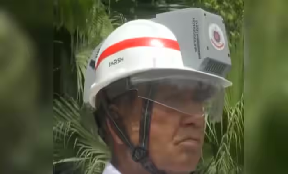

In a significant move to safeguard the well-being of its personnel amid Delhi’s scorching summer heat, the Delhi Traffic Police has launched an enforcement drive featuring advanced air-conditioned (AC) helmets for field officers. The initiative aims to provide much-needed relief to traffic personnel who endure long hours under the blazing sun, ensuring they remain alert and comfortable while performing their duties.
During the drive, officers were seen testing the specialised helmets, which integrate a compact cooling unit and fan mechanism directly into the headgear.
Veer Singh, an Assistant Sub-Inspector (ASI) with the Traffic Police, shared his experience with ANI. He said, “This helmet keeps us relaxed in this weather. It can work easily for 4-5 hours, depending on the charge in its battery,” he explained. Singh highlighted how cool air flows through vents in the helmet, keeping the head comfortable and reducing sweating.
“The air comes in through this; it keeps my head cool. You can also relax with a fan,” he added.
The AC helmet features a white safety shell with red accents, a clear visor, and a mounted cooling device powered by a rechargeable battery. Officers noted that the device not only cools the head but also helps maintain mental alertness by lowering overall body temperature perception.
“If I am feeling hot, then that helps me to be relaxed,” Singh said, emphasizing its effectiveness during peak summer temperatures that frequently soar above 40°C in the national capital.
Footage from the drive also showcased Delhi Traffic Police support vehicles equipped with larger air conditioning units mounted on top, underscoring a broader commitment to personnel welfare. These mobile units, including what appears to be a repurposed food van adapted for operational support, demonstrate innovative use of technology in law enforcement.
Delhi’s extreme summer conditions pose significant challenges for outdoor workers, with heatwaves leading to dehydration, fatigue, and reduced efficiency. Traffic police, who manage bustling intersections, enforce rules, and assist commuters, are particularly vulnerable.
Traditional measures like handkerchiefs or basic fans offer limited respite, making the introduction of AC helmets a welcome technological upgrade.
Senior officials view the pilot as part of ongoing efforts to modernize equipment and improve working conditions. The helmets combine safety standards with comfort features, potentially serving as a model for other police forces across India facing similar climatic challenges.