
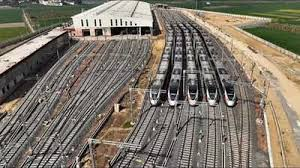

Amajor boost to regional connectivity, the Haryana Cabinet has approved the 136-km-long Delhi–Panipat–Karnal Namo Bharat corridor, a high-speed rail project aimed at transforming travel between Delhi and key cities in Haryana. Once completed, the corridor will significantly cut travel time, enabling commuters to cover the distance in just about 90 minutes.
Project cost and funding details
The total estimated cost of the Delhi–Panipat–Karnal corridor stands at over Rs 33,000 crore.
This corridor is part of a broader plan to build a high-speed regional rail network, improving daily commuting while reducing traffic congestion across Delhi-NCR.
Delhi–Panipat–Karnal Namo Bharat corridor: Key routes and stations
- Sarai Kale Khan
- Kashmere Gate
- Burari
- Alipur
- Key Stations in Haryana:
- Kundli
- Sonipat
- Gannaur
- Panipat
- Gharaunda
- Karnal
In total, around 11 stations will be located in Haryana, enhancing connectivity within the state and linking it efficiently to Delhi.
Integration with existing Namo Bharat corridors
The corridor will be developed as part of Phase 1 of the Namo Bharat network and will integrate seamlessly with other major RRTS routes, including:
- Delhi–Ghaziabad–Meerut corridor (already operational)
- Delhi–Gurugram–SNB–Alwar corridor (under construction)
All three corridors will converge at the Sarai Kale Khan station, enabling smooth, interchange-free travel across routes.
Extension from Panipat to Karnal
Initially planned up to Panipat, the corridor was later extended to Karnal in response to public demand. This expansion increased the total length from around 103 km to 136 km.
The proposal to extend the line to Karnal was first announced in 2020 by former Haryana Chief Minister Manohar Lal Khattar.
Delhi to Haryana in just 90 minutes
Once operational, the Namo Bharat corridor is expected to:
- Reduce travel time between Delhi and Haryana to 90 minutes
- Decongest major highways and urban roads
- Provide a fast, reliable, and eco-friendly transport option
- Help reduce air pollution by lowering dependence on road vehicles
- A Major Infrastructure Boost for NCR