
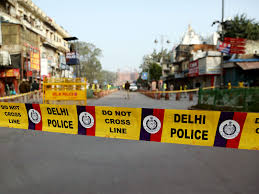

Delhi Police Special Cell has uncovered a major terror-crime nexus linked to fugitive gangster Dawood Ibrahim and Pakistan’s intelligence agency Inter-Services Intelligence (ISI), arresting nine people, including Nepali nationals, officials said.
A large cache of weapons was seized during the operation, pointing to a well-organised module that had allegedly been active for a long time. According to reports, the network was developed with external support and was suspected to be planning activities inside India. Investigators are now examining the group’s links, operational plans and the origin of the recovered arms.
The arrests are being seen as a major breakthrough in efforts to dismantle cross-border terror and organised crime networks. Agencies believe the module may be part of a larger ecosystem that continues to operate with foreign backing.
What has the Delhi Police uncovered?
Officials say the busted module had deep-rooted connections and may have been functioning quietly over a long period. The involvement of foreign nationals and recovery of weapons suggest a coordinated attempt to build an operational network within the country. Probe agencies are now working to identify more members and trace the full extent of the network.
How is Dawood Ibrahim linked to ISI?
Dawood Ibrahim, one of India’s most wanted criminals and the mastermind of the 1993 Mumbai bomb blasts, has long been linked to the ISI. Intelligence reports suggest that their association dates back to the period before the 1993 attacks, when Dawood’s smuggling network was allegedly used to move weapons and explosives into India.
After the blasts, which killed hundreds, Dawood is believed to have taken shelter in Karachi under state protection, a claim Pakistan has consistently denied.
What do global agencies say about this nexus?
The United States Department of the Treasury designated Dawood as a global terrorist in 2003, citing his syndicate, D-Company, for maintaining a strategic alliance with the ISI. Reports have also linked his network to groups like Lashkar-e-Taiba and al-Qaeda.
Security agencies say the network has been involved in fake currency circulation, arms smuggling and recruitment in states like Gujarat and Maharashtra. Investigators also believe that, at times, the ISI may have pressured Dawood to support anti-India operations.