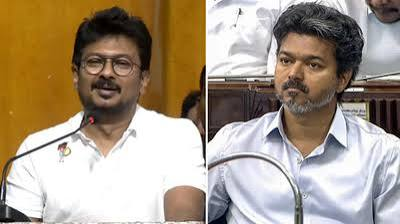

A heated debate over the Cauvery water dispute and Karnataka’s proposed Mekedatu dam dominated proceedings in the Tamil Nadu Assembly on Friday, with Chief Minister Joseph Vijay and Leader of Opposition Udhayanidhi Stalin engaging in a sharp exchange.
Raising the issue in the House, Udhayanidhi Stalin accused the Vijay government of failing to take enough steps to stop Karnataka from moving ahead with the Mekedatu dam project. He demanded that the government explain what action it had taken to protect Tamil Nadu’s interests.
Responding to the criticism, Chief Minister Vijay said his government had already passed a resolution in the Assembly opposing the project. He also reminded the House that he had written to Prime Minister Narendra Modi objecting to the dam.
“We will do whatever it takes to safeguard the interests of Tamil Nadu farmers,” Vijay said. He also accused the DMK of allowing the Karnataka project to move forward during its government in 1969.
Why did the all-party meeting and Bengaluru visit become an issue?
Udhayanidhi Stalin questioned why the Vijay government rejected the idea of holding an all-party meeting on the Mekedatu issue, pointing out that political parties in Karnataka had united to defend their state’s interests.
He also criticised reports that Vijay planned to visit Bengaluru for talks with the Karnataka government. According to Stalin, the government first indicated that the visit would happen but later denied it after facing criticism.
However, Vijay defended the idea of talks, saying there was nothing wrong with discussing issues with a neighbouring state.
“When hostile countries are trying to solve issues through talks, I thought of having talks with our neighbouring state. Even if I get humiliated, I am ready for the people of Tamil Nadu,” the Chief Minister said.
Why is the Mekedatu dam project controversial?
The Mekedatu dam has remained a long-running dispute between Karnataka and Tamil Nadu. Karnataka plans to build the reservoir in Ramanagara district to provide drinking water to Bengaluru and generate 400 MW of electricity. The state has repeatedly assured that Tamil Nadu’s share of Cauvery water will not be affected.
Tamil Nadu, however, strongly opposes the project, arguing that it could impact water availability downstream. Last month, Vijay wrote to Prime Minister Narendra Modi opposing the proposal and questioned why the Ministry of Jal Shakti and the Central Water Commission were considering Karnataka’s revised Detailed Project Report despite Tamil Nadu’s objections.