

The United States of America (USA) has temporarily halted a proposed $14 billion arms sale to Taiwan to prioritize sufficient munitions stockpiles for ongoing military needs amid the ongoing conflict with Iran, according to a report by The Hill. Acting Navy Secretary Hung Cao disclosed the pause during a Senate Appropriations Defense Subcommittee hearing
Cao told Senator Mitch McConnell that the decision was intended to ensure the U.S. military has adequate supplies for “Operation Epic Fury.”
“Right now we’re taking a pause in order to make sure we have the munitions we need for Epic Fury, which we have plenty,” Cao said.
“We’re just making sure we have everything, but then the foreign military sales will continue when the administration deems necessary.”
When asked by McConnell if the sale would ultimately proceed, Cao replied that the decision rests with Defence Secretary Pete Hegseth and Secretary of State Marco Rubio.
McConnell responded, “Yeah, that’s what’s really distressing.”
Cao’s comments appear to diverge from earlier statements by President Donald Trump, who indicated the arms package could serve as a bargaining chip in dealings with China.
“I haven’t approved it yet. We’re going to see what happens,” Trump told Fox News. “I may do it; I may not do it.”
US bows down to China pressure?
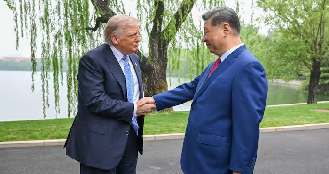
The development comes after Donald Trump’s recent visit to Beijing. Following the visit, Trump revealed that he held extensive discussions on the Taiwan arms package with Chinese President Xi Jinping.
He stated that the matter was addressed “in great detail” and indicated he would make a final decision in the coming weeks.
The development can be viewed as a potential shift in the Trump administration’s approach, raising questions about whether geopolitical negotiations with Beijing are influencing US decisions on Taiwan’s defence needs, the move stands in sharp contrast with long-standing US policy.
For decades, Washington has adhered to the “Six Assurances” established by President Ronald Reagan in 1982.
One of the key principles in this framework is a commitment that the United States would not consult with Beijing regarding arms sales to Taiwan, a policy intended to preserve America’s strategic ambiguity and support for Taiwan’s self-defence.
Depleting US weapon inventory
The decision comes against the backdrop of heightened concerns about US weapons inventories.
Since the Iran conflict began on February 28, the US has expended thousands of missiles, including significant quantities of long-range stealth cruise missiles, Tomahawk missiles, Patriot interceptors, Precision Strike missiles, and ATACMS ground-based missiles.
The White House is preparing to seek $80 billion to $100 billion in supplemental funding from Congress for the Iran conflict.
A large portion of the request is expected to replenish advanced weapons systems depleted during the 12-week war, which has been under a tense ceasefire since early April.
Although US Defence Secretary Pete Hegseth has downplayed concerns about shortages.
“First of all, the munitions issue has been foolishly and unhelpfully overstated,” Hegseth told House appropriators last week.
“We know exactly what we have. We have plenty of what we need.”
Meanwhile, Taiwanese officials have pressed the Trump administration to proceed with the arms sales, emphasizing that a robust Taiwanese defence capability is essential to deter potential Chinese aggression.
“If we want to prevent a war from happening, I think it’s best that Taiwan is strong, able to defend itself, and therefore we should be able to acquire the arms that we need to have a stronger defence,” Alexander Yui, Taiwan’s representative to the United States, said on Sunday.