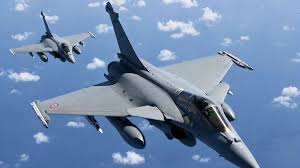

India is weighing a major move to strengthen its air power by planning the purchase of 114 Rafale fighter jets from France. This would add to the 36 aircraft already inducted into the Air Force and 26 earmarked for the Navy. Yet, despite India’s central role in boosting the Rafale’s global reputation, the latest developments in the deal have raised fresh concerns.
India was among the first to publicly endorse the Rafale as a top-tier fighter aircraft. That early confidence helped France promote the jet internationally and secure multiple export orders. Now, however, questions are being asked: is India getting the level of partnership it deserves in return?
Growing Security Concerns Add Urgency
India’s security environment continues to shape its defence decisions. With China operating fifth-generation fighter jets and Pakistan benefiting from close ties with Beijing, the pressure on the Indian Air Force has intensified.
At the same time, the Air Force is dealing with a shortage of fighter squadrons. This gap is not due to inaction but rather a mix of delays and external constraints. India has long aimed to reduce dependence on foreign suppliers by building its own fighter aircraft. Programs like Tejas and the fifth-generation AMCA (Advanced Medium Combat Aircraft) are central to that vision.
However, progress has been slower than expected.
Tejas and AMCA Programs Face Delays
India’s indigenous Tejas program, especially the Mark-1A and the more advanced Mark-2 variants, has encountered hurdles. Both versions fall into the 4.5-generation category, with the Mark-2 often seen as capable of competing with jets like the Rafale.
Yet, engine supply issues have slowed development. The aircraft rely on engines from US-based GE, and supply disruptions have impacted timelines. As a result, even prototype testing for the Mark-2 has faced setbacks.
Meanwhile, India’s ambitious AMCA project, designed to deliver a fifth-generation fighter by around 2035, is also progressing more slowly than planned.
Limited Choices in a Complex Market
In this backdrop, the Rafale deal becomes even more critical. But acquiring fighter jets is far from straightforward. These are highly sensitive platforms, and global options are limited.
The United States remains an unlikely supplier due to high maintenance costs and compatibility issues with India’s largely Russian-origin systems. China is not an option due to geopolitical tensions. Europe, once dominant in defence manufacturing, no longer holds the same edge across all segments.
This effectively narrows India’s choices to France and Russia. However, Russia’s ongoing involvement in the Ukraine conflict has strained its supply chains. Its fifth-generation Sukhoi-57 has also faced criticism over performance concerns.
That leaves the Rafale as the most viable option for India, for now.
Rafale Deal Hits a Technical Roadblock
The proposed deal for 114 Rafale jets is estimated at around Rs 3.25 lakh crore. Earlier reports suggested that nearly 50% of the aircraft components would be produced in India. This would have enabled smoother upgrades and easier integration of Indian weapons systems.
There were also indications that Dassault Aviation might share key source codes to support this level of customization.
However, a recent report by French business publication L’Essentiel de l’Éco claims otherwise.
Source Code Sharing Becomes a Sticking Point
According to the report, France is unwilling to share critical source codes related to key systems in the Rafale. These include the Thales RBE2 AESA radar, the Modular Data Processing Unit (MDPU), and the Spectra electronic warfare suite.
The MDPU, often described as the aircraft’s brain, plays a vital role in operations. Without access to such systems, the aircraft’s flexibility is significantly reduced.
French officials reportedly consider these technologies highly sensitive, developed over many years. Even if production takes place in India, control over these codes would remain with France.
What This Means for India
If France retains control over the core technologies, India may need prior approval to integrate indigenous weapons systems like BrahMos or other upgrades. This raises concerns about operational independence.
The situation presents a question. India shares strong diplomatic ties with France, and past cooperation suggests that technical integration challenges could be resolved over time. Still, the issue of access to critical technology remains significant.
It also leads to a larger question: if such limitations persist, should India reconsider its approach and focus more on accelerating its own fifth-generation fighter program?
India stands at a crucial juncture. The need for immediate reinforcement of its Air Force is undeniable. At the same time, long-term self-reliance remains a key objective.