
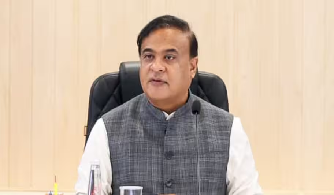

Assam Chief Minister Himanta Biswa Sarma announced that men practicing polygamy and people convicted under criminal laws will not be eligible for benefits under notified government welfare schemes. The announcement was made after the presentation of the Assam State Budget. Assam CM said the move is aimed at promoting women empowerment and gender justice across the state.
Move aimed at women empowerment and gender justice
The Assam government said the decision has been taken to strengthen women empowerment and ensure gender justice.
After State Budget presentation, Assam CM Himanta Biswa Sarma said, “In order to promote women empowerment and gender justice, any male practicing polygamy shall not be eligible to avail benefits under any Government welfare scheme. Any person convicted of an offence under any criminal law shall not be eligible to avail benefits under notified Government welfare schemes.”
Assam UCC Bill passed by Assembly, awaits Presidential assent
On May 26, the Assam Uniform Civil Code (UCC) Bill, 2026, was passed by the Assam Legislative Assembly through a voice vote. The bill was later approved by the Governor and has now been sent to the President of India for assent. The proposed law will come into force only after it receives the President’s approval. Once the President gives assent, the bill will become an Act. The bill proposes a ban on polygamy and makes the registration of live-in relationships compulsory.
With this move, Assam became the first state in the Northeast and the third BJP-ruled state in the country to introduce such legislation. Uttarakhand and Gujarat have already taken steps towards implementing a Uniform Civil Code.
What the Assam UCC Bill proposes
The UCC Bill aims to create a single civil law framework for all residents of Assam. It covers marriage, divorce, inheritance, succession, and live-in relationships.
The bill proposes mandatory registration of marriages and live-in relationships. Marriages must be registered within 60 days of the ceremony, while live-in relationships must be registered within 30 days.
Failure to register a marriage or divorce within the prescribed 60-day period can attract a penalty of Rs 10,000.
Polygamy ban and legal marriage age
The proposed law bans polygamy and bigamy. It also sets a uniform legal age for marriage at 21 years for men and 18 years for women.
The bill excludes Scheduled Tribes from its scope to protect their constitutional rights and traditional practices.
The government said the law seeks to replace religion-based personal laws and ensure equality and gender justice for all citizens.
Religious customs and marriage ceremonies protected
The bill allows people to continue following their religious and cultural marriage customs.
Marriages can still be conducted through traditional ceremonies such as Vedic Bibah, Ahom Chaklong, Saptapadi, Ashirvad, Nikah, Holy Union, and Anand Karaj.
Rules for divorce and child custody
The proposed legislation provides uniform grounds for divorce, including cruelty, desertion, and mutual consent.
It also states that children below the age of five will normally remain in the custody of their mothers.
Live-in relationship registration rules
The bill makes it mandatory for couples in live-in relationships to register their relationship within one month.
If a couple fails to register a live-in relationship within the prescribed period, they may face imprisonment of up to three months, a fine of up to Rs 10,000, or both.
The bill also states that children born from live-in relationships will be considered fully legitimate.
A deserted live-in partner will have the legal right to seek financial maintenance through the courts.
Inheritance and succession provisions
The bill proposes a uniform and gender-equal inheritance system.
Under the proposed law, Class-1 heirs such as the spouse, children, and parents of the deceased will have equal rights in cases where there is no will.
Any adult of sound mind will also have the right to make a written and witnessed will.
Penalties under the proposed law
The bill proposes strict punishments for violations.
Polygamy or bigamy can attract imprisonment of up to seven years under Section 82 of the Bharatiya Nyaya Sanhita (BNS), 2023.
Child marriage and marriage without valid consent can lead to imprisonment of up to two years, a fine, or both under the Prohibition of Child Marriage Act, 2006.
Fraudulent marriages involving force, coercion, or concealment may attract imprisonment of up to seven years along with a fine.
Illegal dissolution of marriage in violation of divorce procedures can lead to imprisonment of up to three years and a fine.
Compelling a divorced person to fulfil unlawful conditions before remarriage can attract three years of imprisonment and a fine of Rs 1 lakh.
Marriage within prohibited relationships, unless protected by valid customs, may result in imprisonment of up to six months and a fine of up to Rs 50,000.
Submitting forged documents during registration may attract imprisonment of up to three months, a fine of up to Rs 25,000, or both.
Existing marriages protected under savings clause
The bill proposes to repeal the Assam Compulsory Registration of Muslim Marriages and Divorces Act, 2024, to simplify the state’s legal framework.
However, a savings clause has been included to ensure that polygamous marriages solemnised before the implementation of the UCC remain legally protected.