
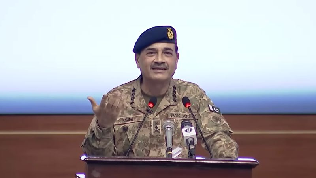

Pakistan is moving towards one of the biggest changes to its military command structure, with Army chief and Chief of Defence Forces (CDF) Asim Munir set to gain wide-ranging authority over the country’s armed forces.
The National Assembly on Thursday approved the Defence Forces of Pakistan Act, 2026, along with changes to the National Command Authority Act, 2010. The move gives legal backing to the military structure introduced through Pakistan’s 27th Constitutional Amendment last year.
One commander, three services
Under the new arrangement, Pakistan’s Army, Navy and Air Force will come under a unified command headed by Munir. The earlier post of Chairman Joint Chiefs of Staff Committee has been replaced by the CDF, with Munir holding both the CDF and Army chief positions.
The proposed system gives the CDF responsibility for operational command, coordination and integration across the three services. The legislation says the CDF ‘shall exercise such powers and perform such functions as are necessary for multi-domain integration, operational cohesion, coordination and oversight of all matters which have joint, tri-services and strategic implications for the Armed Forces and national security of Pakistan’.
His influence will also extend to personnel decisions. The CDF can retire, release or discharge personnel, accept or reject resignations, retain officers in service and relax prescribed retirement or service limits, subject to provisions in the law.
How different is India’s model?
The comparison with India is interesting because New Delhi also created the post of Chief of Defence Staff in 2019, with the first CDS taking office in January 2020. But the two systems are not identical.
In India, the CDS is the government’s principal military adviser and heads the Department of Military Affairs, while the Army, Navy and Air Force continue to have separate service chiefs. The CDS is also the permanent Chairman of the Chiefs of Staff Committee. India has been working towards greater jointness through initiatives such as integrated theatre commands, but it has not placed all three services under a single operational commander in the same manner described in Pakistan’s new framework.
What does it mean for India?
For India, the key change is Pakistan’s move towards a more centralised military command, with its Army, Navy and Air Force brought under the CDF. This could allow faster coordination across Pakistan’s armed forces. India also has a Chief of Defence Staff to promote greater jointness, but its Army, Navy and Air Force continue to have separate service chiefs.
Munir’s role goes beyond operations
Pakistan’s new Defence Forces Headquarters will function as the central headquarters for the armed forces, with Munir serving as the Prime Minister’s ‘principal military advisor’ on defence, national security and military affairs.
The restructuring also extends into Pakistan’s strategic forces. A new Commander of the National Strategic Command has been created, with Gen Syed Aamer Raza appointed to the position last month.
Taken together, the changes mark a major concentration of military authority around the CDF, with Munir positioned at the centre of Pakistan’s new defence hierarchy.