
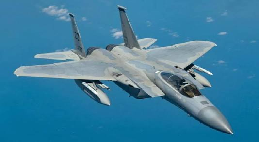

A US fighter jet pilot who was rescued after being shot down over Iran in April has reported seeing a strange formation of drones moments before ejecting from his aircraft, a sight that has triggered debate within American intelligence agencies.
According to a report by CNN, the F-15 pilot described multiple Iranian drones moving together in a formation that looked like a “jellyfish”. The account was shared during an intelligence debrief after his rescue but had not been reported earlier.
How did the pilot describe the unusual drone formation?
One source familiar with the report said the drones appeared interconnected, moving as a single unit with smaller drones underneath larger ones, resembling “legs”. Another description called the sky a “minefield of drones”.
Was this a new Iranian drone warfare capability?
If accurate, the incident could suggest a major development in Iran’s drone program. Experts say it may involve “one-to-many meshed networking”, a system that allows several drones to be controlled together in a coordinated swarm-like formation.
Did the drone formation play a role in the F-15 crash?
Investigators are examining the reason the aircraft was shot down. Early assessments suggest unusual drone activity may have contributed to targeting confusion, but no conclusion has been reached.
The F-15 carried two crew members. The pilot was rescued hours after ejecting, while the weapons systems officer survived in mountainous terrain for over a day before being recovered. A separate US A-10 aircraft was also lost during the rescue mission, though its pilot ejected safely outside Iranian airspace.
Officials remain divided on whether the pilot saw advanced Iranian technology, a test system, or misinterpreted what he observed. Concerns exist because the pilot suffered a concussion and was involved in another shootdown incident.
During debriefings, intelligence officers questioned the account due to its unusual nature.
Despite uncertainty, analysts say if Iran has developed coordinated drone swarm capabilities, it could challenge US and allied forces. Experts note such systems could allow drones to move in formation and carry out complex attacks.