
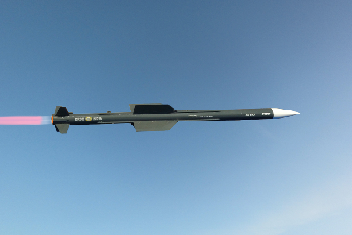

The Ministry of Defence is preparing to allow private Indian companies to manufacture strategic missiles, marking a significant change in the country’s defence production policy. The move comes as demand for advanced missile systems continues to rise, both from the Indian armed forces and friendly foreign nations.
The decision follows growing international interest in the Astra beyond-visual-range (BVR) air-to-air missile, developed by the Defence Research and Development Organisation (DRDO). Indonesia is among the countries interested in acquiring the missile, which has a strike range of more than 180 kilometres.
According to sources, the state-owned manufacturer Bharat Dynamics Limited (BDL) is unable to meet the increasing production requirements on its own, prompting the government to involve the private sector.
Private companies to compete for Astra Mark 2 production
The Defence Ministry is expected to issue a Request for Proposal (RFP) soon, inviting leading private defence companies to manufacture the Astra Mark 2 missile.
Companies likely to participate include ICOMM, Adani, Bharat Forge, the Tata Group and the Mahindra Group.
The Astra Mark 2 has a reported operational range of 180-200 kilometres and has successfully completed testing. It has been developed to counter China’s PL-15E long-range air-to-air missile, which was supplied to Pakistan ahead of Operation Sindoor last year.
The missile is planned for integration with several fighter aircraft in the Indian Air Force and Navy, including the Tejas Mark 1A, MiG-29, Su-30MKI and Rafale Marine.
Pralay missile may be the next private sector project
Government sources said the Pralay tactical ballistic missile is likely to be the next strategic missile programme opened to private industry.
The two-stage missile has a strike range of around 500 kilometres and can travel at nearly six times the speed of sound.
Pralay forms part of India’s Integrated Rocket Force, which also includes the newly developed Long-Range Land Attack Cruise Missile (LRLACM), the next-generation BrahMos missile and the extended-range Pinaka multi-barrel rocket launcher capable of striking targets up to 300 kilometres away.
India strengthening missile arsenal after Operation Sindoor
Following Operation Sindoor, the government has increased its focus on expanding India’s inventory of long-range missiles and rockets to strengthen deterrence against potential adversaries.
Officials believe modern conflicts increasingly rely on stand-off weapons capable of striking targets from long distances without exposing military personnel to immediate danger.
The recent conflict involving Iran and the United States has also reinforced the importance of strong offensive and defensive missile capabilities, highlighting the vulnerability of critical infrastructure to missile attacks.
Air defence network also being expanded
India is simultaneously strengthening its air defence systems.
The country is working with Israel on a long-range surface-to-air missile system designed to protect naval warships.
At the same time, authorities are building a multi-layered anti-missile and anti-drone defence network to counter low-cost armed drones reportedly used by Pakistan, as well as long-range rockets and ballistic missiles deployed by China’s People’s Liberation Army (PLA).
More S-400 systems planned
India is also set to further enhance its air defence shield with the arrival of the fifth S-400 air defence system from Russia, expected in November.
The S-400 batteries are also expected to be safeguarded by Russia’s Pantsir air defence system, which is designed to defend against kamikaze drones and rocket attacks.