
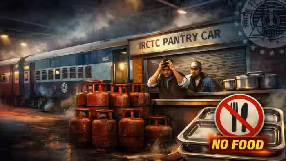

Amid reports that LPG supplies are being disrupted due to the ongoing conflict in the Middle East, the shortage is now beginning to affect daily life in India. Hotels, restaurants and small eateries are struggling to keep their kitchens running, forcing many to cut down their menus or switch to alternative fuels.
The impact is now reaching the railways as well. The Indian Railway Catering and Tourism Corporation (IRCTC), which manages food services on trains, is also likely to face difficulties due to the shortage of LPG cylinders. As a result, Indian Railways is considering temporarily suspending cooked meal services on trains. Passengers who had pre-booked meals while reserving their tickets may receive refunds if the services are halted. If the situation continues, travellers may have to carry their own food while undertaking long train journeys.
LPG shortage begins to affect food services in trains
As the LPG shortage begins to affect food services, IRCTC has asked its licensees to shift to alternative cooking methods at railway food centres. Vendors have been directed to use options such as microwave ovens and electric induction systems wherever possible. They have also been asked to activate contingency plans to ensure that food services for passengers continue without major disruption.
However, the directive applies to food plazas, refreshment rooms and Jan Aahar outlets operating at railway stations across the country following a reported cut in Liquefied Natural Gas (LNG) supplies. Railway officials say the shortage is already affecting IRCTC’s base kitchens, where meals are prepared before being loaded onto trains. Pantry cars mainly function as distribution and reheating units and usually do not carry LPG cylinders. However, disruption in LPG supply to base kitchens has begun slowing down the preparation of meals meant for long-distance trains.
IRCTC serves nearly 17 lakh meals every day across India
According to officials, IRCTC serves nearly 17 lakh meals every day across India through its network of base kitchens and onboard catering services. Around 20 percent of these meals are served in the western zone, making the region particularly vulnerable if the shortage continues. A senior railway official said the situation has become serious and could worsen in the coming days.
The shortage comes amid the ongoing West Asia crisis. In response, the government has revised the priority order for allocating domestically produced natural gas. LPG production has now been placed alongside CNG and piped cooking gas at the top of the list. As a result, hotels and restaurants that rely on market-priced commercial LPG are facing a growing supply crunch
Saudi Arabia and UAE Pipelines provide backup oil routes amid rising tensions
As tensions between the US and Iran threaten the flow of oil through the Strait of Hormuz, only two major Gulf pipelines currently offer alternative land routes to transport crude to global markets. The first is Saudi Arabia’s East-West pipeline, which runs about 746 miles from the oil-rich eastern region of the country to the Red Sea port of Yanbu. The second is the UAE’s Habshan-Fujairah pipeline, which carries crude oil from Abu Dhabi to Fujairah on the Gulf of Oman, bypassing the Strait of Hormuz.
Normally, the Strait of Hormuz handles nearly 20% of the world’s oil and gas supply. Any disruption to this key shipping route quickly puts pressure on global energy markets. In such a situation, the main concern is not whether oil prices will rise, but how high they could climb and how long the impact might last.

