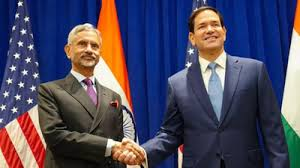

India and the United States took another step toward deepening their strategic partnership as External Affairs Minister Dr S. Jaishankar held a detailed telephonic conversation with US Secretary of State Marco Rubio on Tuesday. The discussion covered a broad spectrum of priority areas, including trade, critical minerals, nuclear cooperation, defence, and energy, sectors central to the evolving India-US relationship.
Emphasis on Continuous Engagement
Dr Jaishankar underscored the shared commitment to staying closely connected as both nations navigate bilateral and global challenges. In a post on X, he described the exchange as constructive and forward-looking.
“Just concluded a good conversation with @SecRubio. Discussed trade, critical minerals, nuclear cooperation, defence and energy. Agreed to remain in touch on these and other issues,” Jaishankar wrote.
Timing Linked to New US Envoy’s Arrival
The high-level call came just a day after Sergio Gor formally assumed charge as the US Ambassador to India in New Delhi. The timing has drawn attention, suggesting renewed diplomatic energy early in Gor’s tenure.
Sharing details on X, Ambassador Gor indicated that the leaders discussed the next steps in bilateral trade negotiations and cooperation on critical minerals. He also hinted at the possibility of an in-person meeting between the two leaders as early as next month.
India Set to Join Pax Silica Initiative
Earlier on Monday, Gor announced that India would be invited to join Pax Silica, a US-led strategic initiative focused on safeguarding critical supply chains linked to silicon, advanced manufacturing, and artificial intelligence.
Built on collaboration with trusted partners, Pax Silica aims to reduce coercive dependencies, protect materials essential to AI development, and ensure that aligned nations can deploy transformative technologies at scale. US officials view the initiative as part of a new economic security framework, where resilient supply chains, reliable technology, and strategic infrastructure are seen as vital to long-term national power and economic growth.
“Real Friends Can Disagree,” Says US Envoy
Ambassador Gor also highlighted the importance of open communication, even amid differences. “Real friends can disagree but always resolve their differences,” he said, adding that both India and the US remain actively engaged across multiple areas.
Reiterating Washington’s intent to move forward, Gor stressed that trade talks remain a priority. “We are determined to get a trade deal,” he said, signalling that negotiations will continue without interruption.
Trade Talks at a Critical Juncture
These remarks come at a sensitive moment for India-US trade relations, with negotiations yet to achieve a major breakthrough. Recently, US Deputy Trade Representative Rick Switzer visited New Delhi with his team to assess progress. The latest two-day round of talks concluded on December 11, 2025.
Indian industry bodies and exporters are watching developments closely, particularly as high import duties continue to affect shipments to the US. While exporters are exploring alternative markets, the American market remains crucial, accounting for nearly 18 per cent of India’s total exports.
Long-Term Goals Remain Ambitious
In February 2025, leaders from both countries directed officials to finalise the agreement, aiming to conclude the first tranche by fall 2025. However, the broader objective is ambitious: expanding bilateral trade to $500 billion by 2030.
The economic stakes are significant. The US was India’s largest trading partner in 2024–25, with total trade valued at $131.84 billion, a figure that highlights why these countries are keen to keep conversations going and find the same page for trade.