
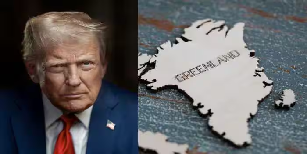

US President Donald Trump’s renewed attempt to acquire Greenland, following the dramatic capture of Venezuelan President Nicolas Maduro, revives Washington’s long-standing, albeit fanciful, quest for the mineral-rich Arctic territory under Danish rule. While the White House says that “all options remain on the table,” Secretary of State Marco Rubio has reportedly ruled out military action.
Trump’s unpredictability keeps even seemingly impossible ideas alive, but success will depend less on bold talk and more on practical choices. So, what realistic options does Washington have?
The Purchase Option
Buying Greenland isn’t a new idea. The US tried several times before, in 1867, 1910, and most notably in 1946, when President Harry Truman offered USD 100 million, calling the island “indispensable” to US security.
Rubio told Congress this week that purchasing Greenland remains “the ideal outcome,” hinting that Washington could offer billions to offset Denmark’s roughly USD 600 million annual subsidy to the island. But both Copenhagen and Greenland’s self-governing administration have firmly rejected any notion of a sale. Under international law, Greenlanders themselves would have to agree and that seems unlikely.
A recent poll shows 85% of Greenland’s 57,000 residents oppose US control, with barely 6% in favor.
Winning Hearts and Minds
Instead of trying to buy the island outright, Washington has turned to diplomacy. The US reopened its consulate in Nuuk in 2020 and appointed a special envoy to the Arctic territory. The goal is clear, build influence with Greenland’s independence movement and position the US as a partner if the island ever breaks away from Denmark.
Vice President JD Vance’s visit in March underscored this approach. He spoke of a “shared destiny” and promised massive investment if Greenland chose to align with the United States. Locals, however, remain unsure, intrigued by the promise of prosperity, wary of being swallowed by an unpredictable superpower.
A “Free Association” Deal
The most realistic long-term strategy, analysts say, could be a Compact of Free Association, similar to deals the US maintains with the Marshall Islands or Micronesia. Under such an arrangement, Greenland would stay independent but receive American defense guarantees, aid, and trade privileges. In return, Washington would get unrestricted access for its military and infrastructure projects.
The Invasion Question
Could Trump actually use force? In theory, yes. In practice, it would be disastrous. Greenland has no standing army, and Denmark maintains only a light military presence. But any US assault would trigger NATO’s Article 5, treating it as an attack on an ally and destroying what remains of the transatlantic alliance.
Danish Prime Minister Mette Frederiksen warned bluntly that invading Greenland would mean “the end of NATO” and the unraveling of the postwar international order.