
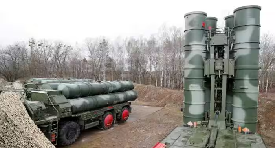

A fresh swirl of reports has put Russia, Turkey and India at the centre of a high-stakes defence intrigue. At the heart of the storm is the S-400 air defence system, a weapon that reshaped Turkey’s relations with the United States and could now find its way to India.
Turkey purchased the Russia-made S-400 system in 2019, defying America’s repeated warnings. The move triggered U.S. sanctions and forced Ankara out of the F-35 stealth fighter jet programme. Since then, the missile batteries have remained in storage, never integrated into Turkey’s defence network.
Now, reports from Turkish outlet Nefes claim Moscow has approached Ankara to buy back the unused systems. Russia, the report suggests, is struggling with supply chain issues that have delayed production and delivery to clients, including India, which has so far received three of the five S-400 squadrons it ordered. The remaining two squadrons are still pending.
That has fuelled speculation. If Russia reclaims the S-400s from Turkey, could those systems be redirected to India?
With tensions along the India-Pakistan border, New Delhi has been fast-tracking its air defence buildup. Analysts believe Moscow would rather prioritise India, a long-standing strategic partner, over Pakistan despite whispers in defence circles.
The F-35 Factor
The potential deal also ties back to Washington. After returning to the White House, U.S. President Donald Trump offered Turkey a way back into the F-35 programme. But the condition was clear: Ankara must rid itself of the S-400.
If Ankara complies, the door to the American fighter jet could reopen. Turkish President Recep Tayyip Erdoğan has repeatedly voiced interest in rejoining the programme, and lobbying in Washington is already underway. But Turkey faces another pressure point. Neighbouring Greece is advancing with its own F-35 purchase, raising the stakes for Ankara.
Moscow’s Denial, But Questions Remain
Russian state-owned domestic news agency RIA Novosti has dismissed reports of a buyback, quoting Federal Service for Military-Technical Cooperation chief Dmitry Shugaev, who said Moscow had instead offered Turkey comprehensive servicing for the system.
But experts point out that major arms transfers are rarely played out in the open.
“The S-400 is stuck in limbo for Turkey. It cannot be integrated with NATO systems, and it prevents Ankara from moving closer to the United States on defence cooperation,” a senior defence analyst in New Delhi explained.
“For Russia, redirecting these units to India could solve two problems at once: ease supply pressure and reinforce a reliable partner,” he said.
What Next For India?
India’s original $5.4 billion S-400 deal with Russia envisioned five full squadrons. Three have been inducted, and their deployment along sensitive fronts has already shifted the balance in the region. But delays in the remaining deliveries have frustrated Indian planners.
If Turkey offloads its S-400s, Moscow could quietly reroute them to New Delhi, giving India its full order sooner than expected. Such a move would also strengthen India’s layered defence shield at a time of heightened tensions with both Pakistan and China.
For now, no side has confirmed the existence of a secret deal. But the convergence of geopolitical needs – Turkey’s hunger for F-35s, Russia’s production crunch and India’s demand for advanced air defences – makes the possibility difficult to ignore.