
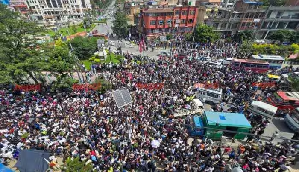

Massive protests led by Generation Z demonstrators broke out in Kathmandu on Monday, claiming the lives of nine people. The protest erupted over corruption allegations against the government and the recent ban on major social media platforms, including Facebook, YouTube, and X.
Protesters vandalized the parliament gate as police fired multiple rounds to control the crowd. Several people have been injured, and casualties are feared amid the escalating unrest.
According to the Nepal Police, “Nine people have lost their lives as protests turned violent in Kathmandu as people staged a massive protest against the ban on Facebook, Instagram, WhatsApp, and other social media sites, leading to clashes between police and protesters.”
Since Friday, several social media platforms, including Facebook, YouTube, and X, have been inaccessible in Nepal after the government blocked 26 unregistered sites, sparking anger and confusion among users.
According to The Kathmandu Post, the demonstrations in Kathmandu quickly turned violent, forcing authorities to impose a curfew across key parts of the capital.
It began as a peaceful march escalated after protesters broke through barricades and entered restricted zones near Parliament. Police retaliated with water cannons, teargas, and rubber bullets as demonstrators hurled tree branches and water bottles while chanting anti-government slogans. Some protesters reportedly breached the Parliament compound, further heightening tensions.
Kathmandu District Administration Office Reaction
In response to the protest, the Kathmandu District Administration Office extended the curfew initially imposed in the capital’s Baneshwar area.
The new curfew now includes several high-security zones, such as the President’s residence (Shital Niwas), the vice-president’s residence in Lainchaur, Maharajgunj, all sides of Singha Durbar, the prime minister’s residence in Baluwatar, and adjacent areas, as reported by The Kathmandu Post.
According to The Kathmandu Post, protests come in the wake of the Nepal government’s decision to ban 26 unregistered social media platforms, including widely used apps such as Facebook, Instagram, WhatsApp, YouTube, and Snapchat. The move has sparked public outrage, especially among young people, who accuse the government of stifling free expression while failing to address deep-seated corruption.