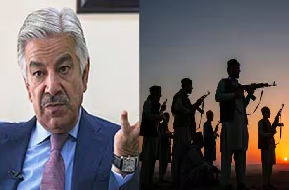

Saudi Arabia will come to Pakistan’s aid if the country faces any aggression, Defence Minister Khawaja Asif said, highlighting the defensive nature of the Strategic Mutual Defence Agreement signed by the two nations earlier this week.
Speaking to a local news channel, Asif likened the pact to NATO’s collective defence principle, emphasising that it is intended for protection, not offensive operations.
Meanwhile, Khawaja Asif also made contradictory remarks on whether the country’s nuclear arsenal “will be made available” to Saudi Arabia under the newly signed defence pact between the two nations.
In an interview with a local news channel, Khawaja Asif was asked if Pakistan’s nuclear deterrence would also extend to Saudi Arabia under the new pact. He said Pakistan’s nuclear capability had been firmly established since its tests and that the country has trained forces, adding that its capabilities would be made available to Saudi Arabia in accordance with the agreement.
However, in a separate interview, Khawaja Asif rejected claims that nuclear weapons were part of the deal, saying they were “not on the radar.”
Additionally, Pakistan’s Defence Minister Khawaja Asif also said that the pact is not intended for any aggressive action, but emphasised that the arrangement would be activated if either party faces a threat.
Saudi-Pak Defence Deal
The “mutual defence” pact was inked during Pakistani Prime Minister Shehbaz Sharif’s visit to Riyadh this week. One important provision of the agreement specifies that an attack on either nation will be treated as an attack on both. The agreement seeks to enhance defence collaboration and “strengthen joint deterrence against any aggression.”
India Reacts To Saudi-Pak Defence Deal
The Ministry of External Affairs said the government was aware that the development, which formalises a long-standing arrangement between the two countries, had been under consideration. It added that the Centre will examine the implications of the strategic mutual defence pact signed between Saudi Arabia and Pakistan.
Timing Of Saudi-Pak Defence Deal
The agreement was signed amid growing regional unrest. Just days earlier, 26 people were killed in the Pahalgam attack by terrorists linked to The Resistance Front, a proxy of the Lashkar-e-Taiba terrorist organisation. In retaliation, India launched ‘Operation Sindoor,’ targeting nine key militant sites across Pakistan and Pakistan-occupied Kashmir (PoK). The strikes reportedly destroyed these sites and killed over 100 militants affiliated with Jaish-e-Mohammed (JeM) and Lashkar-e-Taiba (LeT). Pakistan responded with a counter-attack, further escalating already tense relations.
This development also comes amid fresh threats from Lashkar-e-Taiba (LeT) against India, with the group vowing to avenge “Operation Sindoor,” the Indian air strikes on terror camps in Pakistan and Pakistan-occupied Kashmir following the Pahalgam attack in May 2025.
Lashkar declared that its “resolve is strong” and warned, “the time is near when their rivers will be ours, their dams will be ours, the entire Jammu and Kashmir will be ours.”