
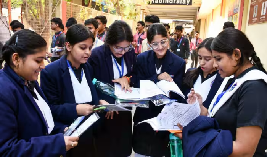

The Supreme Court issued sweeping national guidelines mandating psychological safeguards and regulatory oversight across all educational institutions. The move comes in response to a disturbing rise in student suicides, described by the Court as a “systemic failure that cannot be ignored.” The decision, given by Justices Vikram Nath and Sandeep Mehta, applies to all educational spaces — including schools, colleges, universities, coaching centres, training academies, and hostels. Using their authority under Articles 32 and 141 of the Constitution, the Supreme Court said these rules must be followed like law until a new law is made.
The judgment was prompted by the tragic case of a 17-year-old NEET aspirant who died by suicide in July 2023 while studying for medical entrance exams at Aakash Byju’s Institute in Visakhapatnam. Acting on a petition filed by her father, the Supreme Court handed over the investigation to the CBI, reversing a previous dismissal by the Andhra Pradesh High Court.
The Court observed that the rising distress among India’s youth reflects a deeper, underlying issue within the country’s education system. Citing data from the National Crime Records Bureau, it highlighted that India saw 1,70,924 suicides in 2022, with students making up 7.6% of the total — around 13,044 deaths. Over 2,200 of these were directly related to exam failures.
To tackle the growing mental health crisis among students, the Supreme Court has issued a series of nationwide guidelines, drawing from government initiatives like UMMEED, MANODARPAN, and the National Suicide Prevention Strategy. These uniform policies must be followed by all educational institutions and include the following key measures:
Mental Health Professionals: Institutions with over 100 students are required to employ at least one certified mental health expert—such as a psychologist, counsellor, or social worker. Smaller institutes must establish formal referral links with external professionals.
Suicide Prevention Helplines: All campuses, hostels, common areas, and official websites must clearly display helpline numbers, including Tele-MANAS, for immediate student access.
No Academic Segregation: Coaching centres and schools are strictly barred from grouping students based on academic performance, engaging in public humiliation, or applying high-pressure teaching methods.
Mandatory Staff Training: Faculty and staff must undergo psychological first-aid and referral training twice a year. Additional sensitivity training is required for working with students from marginalised backgrounds, such as SC, ST, OBC, EWS, LGBTQ+ communities, students with disabilities, and those with past trauma.
Safe Infrastructure: Residential schools and colleges must fit tamper-proof ceiling fans and restrict access to rooftops and balconies to prevent impulsive acts of self-harm.
Grievance Redressal & Support Systems: Institutions must establish confidential reporting mechanisms for issues like sexual harassment, ragging, or caste, gender, or religion-based discrimination. Immediate psychosocial support must also be provided to those affected.
Balanced Student Development: Schools and colleges are advised to ease exam stress by redefining academic success, encouraging participation in extracurriculars, and offering career guidance tailored to students’ interests and aspirations.
Coaching centres in cities such as Kota, Jaipur, Sikar, Chennai, Hyderabad, Delhi, and Mumbai—known for their highly competitive academic settings—have been identified for urgent mental health support and reinforced preventive infrastructure.