
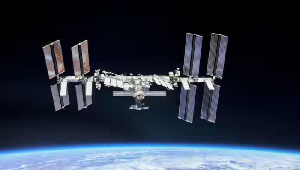

Russia’s biological research satellite, Bion-M No.2, returned safely to earth on September 19 after spending 30 days in orbit. Dubbed the ‘Noah’s Ark’ of space research, the mission carried 75 mice, over 1,500 flies, plant seeds, microorganisms and other biological samples. Scientists aimed to study the effects of space on living organisms and test whether life could survive travel through space and potentially arrive on earth.
Launched on August 20 from Kazakhstan’s Baikonur Cosmodrome aboard a Soyuz-2.1B rocket, the satellite orbited at an altitude of approximately 370-380 kilometres, exposing its living cargo to cosmic radiation and microgravity conditions throughout the month-long journey.
Landing, Immediate Examination
The satellite landed in the grasslands of Russia’s Orenburg region. A minor fire broke out at touchdown but was promptly extinguished. Technical teams arrived via helicopter and quickly retrieved the live specimens.
Initial checks were carried out in on-site medical tents, including tests on the flies’ motor activity to assess the impact of space travel on their nervous systems.
A Ten-Part Scientific Programme
The mission was a joint effort of Roscosmos, the Russian Academy of Sciences and the Institute of Biomedical Problems (IBMP). Its scientific programme was divided into 10 sections:
- The first two focussed on the effects of gravity and radiation on animals.
- Sections three to five studied plants and microorganisms in space conditions.
- Sections six to nine tested biotechnology, radiation protection and new technologies.
- The tenth section was dedicated to student experiments, involving participants from Russia and Belarus.
Testing Origins Of Life From Space
Called “Meteorite”, the most intriguing experiment was conducted during the satellite’s return. Microorganisms were embedded in basalt rocks to test whether they could survive the intense heat generated during atmospheric re-entry.
This experiment explores the panspermia theory, which suggests that life on earth may have originated from spaceborne microorganisms.
Scientists plan to analyse all specimens carefully to understand how microgravity, cosmic radiation and extreme conditions affect living organisms. The mission not only provides critical insights into space biology but also offers data for the future long-duration space travel of animals, plants and possibly humans.