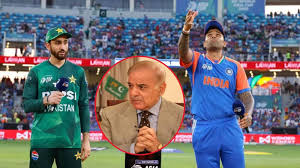

With less than a week remaining for the high-voltage India vs Pakistan clash in the T20 World Cup, the Pakistan Cricket Board (PCB) could reverse its boycott stance within the next 24–48 hours. The final decision hinges on a crucial meeting between PCB chairman Mohsin Naqvi and Pakistan Prime Minister Shehbaz Sharif after an ICC delegation urged Islamabad to reconsider the move. The development is significant because the India–Pakistan fixture is the tournament’s biggest commercial driver, and uncertainty has already sparked concern across global cricket.
The International Cricket Council sent a two-member delegation to Lahore on Sunday, featuring Deputy Chairman Imran Khwaja and Associate Members’ representative Mubashir Usmani, in an attempt to resolve the impasse before the marquee encounter at Colombo’s R Premadasa Stadium. The discussions appeared constructive, with both sides willing to engage, prompting the PCB to revisit its earlier stance.
“The PCB chairman is expected to have a meeting with the Prime Minister on Monday, and one can expect a final decision on the same in the next two days or so. The final call cannot be taken by the PCB, and it is clearly dependent on the Government,” a source told Hindustan Times on Monday morning.
Naqvi, who also serves as Pakistan’s Interior Minister, is set to brief Sharif on the ICC discussions, underlining that the matter has moved beyond cricket administration into government territory.
Government Approval Is the Deciding Factor
The controversy began when the Government of Pakistan announced via its official X handle on February 1 that the team would not take the field against India. Prime Minister Shehbaz Sharif later reiterated the stance during a cabinet address, Hindustan Times reported. Even if the PCB wants to play, it cannot proceed without governmental clearance, making Monday’s meeting arguably the most important off-field development before the tournament’s biggest match.
PCB Places Three Conditions for Boycott Reversal
Meanwhile, a separate report by India Today citing Cricbuzz revealed that the PCB has outlined three conditions to the ICC if it is to consult the government about reversing the boycott:
- Increased share in ICC revenue
- Restoration of bilateral cricket with India
- Enforcement of a handshake protocol
Financial leverage appears central to Pakistan’s strategy. India Today, quoting revenue data, reported that Pakistan receive 5.75 percent of ICC distributions, approximately USD 34.51 million annually, with only the BCCI, ECB, and Cricket Australia earning more. The bilateral cricket demand presents structural complications, as such series require approval from both governments, meaning the ICC can only mediate. The handshake protocol request follows tensions during the Asia Cup 2025, when India declined post-match handshakes after the Pahalgam terror attack, reflecting broader geopolitical strain.
ICC Warns Boycott Is “Not Sustainable”
During the Lahore meeting, the ICC deputy chairman conveyed that maintaining a boycott is “not sustainable and is not good for the sport,” according to Hindustan Times. Bangladesh Cricket Board chief Aminul Islam was also present, and India Today reported that compensation discussions may form part of a wider settlement framework.
What a PCB U-Turn Would Mean for the T20 World Cup
From a tournament perspective, the India–Pakistan match drives broadcast spikes, sponsorship value, and global viewership. Losing it would reshape the event’s commercial narrative overnight. Historically, political flashpoints have disrupted bilateral cricket but rarely ICC tournaments, which is why administrators and broadcasters are closely tracking the situation. If Islamabad grants approval, the PCB can frame the reversal as diplomacy through sport. If not, the fallout could trigger scheduling complications and renewed debate over governance in international cricket. For now, world cricket waits on a political green light.