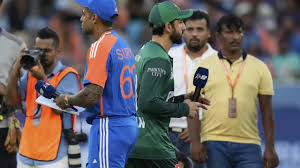

Former Indian cricketer Subramaniam Badrinath has taken a swipe at Pakistan following the government’s decision to have its men’s team boycott the group-stage clash against India in the ICC Men’s T20 World Cup. The marquee India-Pakistan encounter, scheduled for February 15, will not take place after Pakistan officially announced that its team “shall not take the field” for the match.
Badrinath’s Sharp Dig on Social Media
Reacting to the development on X, Badrinath posted, “Fear of facing this Indian batting order?” alongside hashtags #INDvPAK and #T20WorldCup. His remark hinted that Pakistan’s decision may have been influenced by India’s intimidating T20I batting strength rather than purely administrative or political considerations.
The Pakistan government confirmed the boycott while approving the team to participate in the rest of the tournament. However, no specific reason was cited for opting out of the clash against India.
Pakistan’s Poor Record Against India
Pakistan’s struggles against India in ICC T20 World Cups are well-documented. The two teams have met eight times, with India emerging victorious on seven occasions. That trend extended into recent tournaments as well, including last year’s Asia Cup, where India clean-swept Pakistan in a three-match sequence, capped by a dominant final win.
India’s recent dominance has been fuelled by its emerging batting stars. Abhishek Sharma and Tilak Varma have repeatedly put Pakistan’s bowling under pressure. Tilak’s unbeaten 69 in the Asia Cup final chase stood out as a defining knock, showcasing his composure on the big stage.
Red-Hot Form Ahead of the World Cup
India head into the World Cup in formidable form after crushing New Zealand 4-1 in a home T20I series. Led by Suryakumar Yadav, India smashed a record 69 sixes in the series, including a mammoth 271/5 in the final match. Performances from Ishan Kishan, Abhishek Sharma and Suryakumar have reinforced India’s reputation as the most explosive batting unit in the competition.
Pakistan’s decision also comes amid wider controversy after the International Cricket Council replaced Bangladesh with Scotland when the Bangladesh Cricket Board refused to travel to India over security concerns. After extensive reviews, the ICC concluded that no credible threat existed and retained the original schedule.