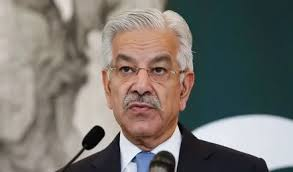

Pakistan’s Defence Minister Khawaja Asif has delivered one of his most candid assessments of Islamabad’s long and complex relationship with the United States, telling Parliament that the country was exploited for strategic purposes and later abandoned.
In a sharply worded speech, Asif argued that Pakistan’s decision to realign with Washington after 1999m especially in the context of Afghanistan, proved to be a costly mistake whose consequences are still unfolding.
Pakistan’s Alignment with the US Called a ‘Strategic Miscalculation’
Addressing lawmakers, Asif said that seeking American support in the post-1999 period inflicted long-term political, economic, and social damage on Pakistan.
He described the move as a serious misjudgment, warning that the country continues to pay the price decades later. According to him, policies shaped around external alliances rather than national priorities weakened Pakistan’s internal stability and left lasting scars.
‘Jihad Was Misused’: Minister Questions Past Narratives
In a significant departure from long-standing official positions, Asif also challenged the narrative that Pakistan’s involvement in the Afghan conflict was driven by religious obligation.
He acknowledged that Pakistanis were mobilised and sent to fight under the banner of jihad, calling the framing misleading and harmful. The defence minister said the concept was used to justify wars that were not rooted in genuine religious necessity.
Asif further claimed that the country’s education system was reshaped to legitimise this ideology during that period. Many of those changes, he noted, remain embedded in society today.
Referring to the anti-Soviet conflict of the 1980s, he argued that the war was driven primarily by American geopolitical interests and did not warrant any declaration of jihad.
Long-Term Impact of External Conflicts
The defence minister stressed that Pakistan’s involvement in conflicts beyond its core national interests created deep and lasting instability. From social divisions to security challenges, he said the country is still grappling with the after-effects.
According to Asif, the decision to participate in externally driven wars contributed to radicalisation, economic pressure, and a cycle of violence that has been difficult to reverse.
‘Used and Thrown Away’: Strong Words for US Relationship
Asif reserved his strongest criticism for Pakistan’s role after the September 11, 2001 attacks. He said the country shifted its stance against the Taliban to support the US-led war on terror, only to find itself alone when Washington later withdrew from the region.
Using unusually blunt language, he told Parliament that Pakistan was treated “worse than toilet paper”—used for a purpose and then discarded.
He also held former military rulers Zia-ul-Haq and Pervez Musharraf responsible for drawing Pakistan into external conflicts whose consequences the nation continues to bear.
‘Losses Cannot Be Compensated’
Summing up the long-term fallout, Asif said the human, economic, and security losses suffered by Pakistan are beyond repair.
“The losses we suffered can never be compensated,” he told lawmakers, describing past decisions as irreversible errors that reduced the country to a pawn in larger geopolitical struggles.