
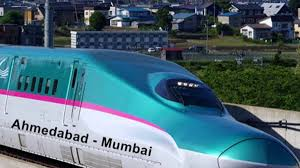

Work on the Mumbai-Ahmedabad Bullet Train Project has reached an important construction milestone, with rapid progress being made in the installation of overhead electrification (OHE) masts. The development marks a key step toward powering India’s first high-speed rail corridor.
What is the latest update?
Union Railways Minister Ashwini Vaishnaw shared an update on social media on Monday, saying that the installation of OHE masts along the corridor is moving at a good pace. He described the progress as a critical stage in enabling electric traction for the bullet train service.
What are OHE masts?
OHE masts are a vital part of the traction system that will supply power to high-speed trains. Officials said installation work is currently underway across several sections of the corridor, including elevated viaducts. These stretches require high levels of precision and engineering accuracy to ensure safety and smooth operations at very high speeds.
According to project authorities, more than 20,000 steel OHE masts will be installed along the 508-km alignment. The masts, measuring between 9.5 metres and 14.5 metres in height, will support the 2×25 kV overhead traction system. This includes contact and catenary wires, fittings, earthing systems and other essential equipment needed for bullet train operations.
Many of these masts are being erected on tall viaducts built at significant heights above the ground, highlighting the technical complexity of the project. Officials added that while the electrification system meets global high-speed rail standards, most components are being manufactured within India, helping strengthen domestic production capabilities.