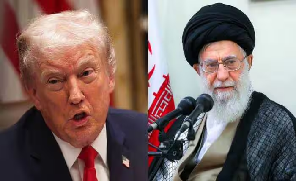

Hours before crucial US-Iran nuclear negotiations are set to begin, the United States issued an urgent security directive urging all American citizens in Iran to evacuate immediately and warning that no assistance should be expected if the situation deteriorates.
The advisory was released through the US Virtual Embassy Tehran, which serves as Washington’s primary communication channel with Americans in Iran due to the absence of a physical US diplomatic mission.
The alert advises US citizens to make plans to depart Iran without relying on US government assistance.
“US citizens should leave Iran now. Consider departing Iran by land to Türkiye or Armenia, if safe to do so. Leave Iran now. Have a plan for departing Iran that does not rely on US government help,” the advisory states.
For those unable to leave immediately, the guidance recommends identifying secure locations, limiting movement, and maintaining supplies of food, water, medications, and other necessities.
“If you cannot leave, find a secure location within your residence or another safe building. Have a supply of food, water, medications, and other essential items,” the advisory states.
Safety Recommendations: The advisory includes several precautions for Americans who remain in Iran:
- Avoid public demonstrations and large gatherings
- Keep a low public profile
- Monitor surroundings and local developments
- Follow local news for updates
- Keep communication devices charged
- Maintain regular contact with family or contacts outside Iran
- Establish alternative communication methods in case primary channels are disrupted
The advisory highlights additional considerations for individuals who hold both US and Iranian citizenship.
“US-Iranian dual nationals must exit Iran on Iranian passports. The Iranian government does not recognize dual nationality and will treat US-Iranian dual nationals solely as Iranian citizens. US nationals are at significant risk of questioning, arrest, and detention in Iran. Showing a US passport or demonstrating connections to the United States can be reason enough for Iranian authorities to detain someone,” the advisory states.
The advisory also cautions US citizens against travel to Afghanistan, Iraq, and the Pakistan-Iran border region.
The advisory underscores that US citizens in Iran have limited options for official assistance. The United States has had no diplomatic or consular relations with Iran since 1979 and maintains no embassy or consulates in the country. As a result, the US government cannot provide direct on-the-ground support to Americans in Iran.
In place of a US diplomatic presence, Switzerland serves as the United States’ protecting power, representing US interests and offering limited consular services through its embassy in Tehran. Americans requiring assistance are directed to contact the Swiss Embassy’s Foreign Interests Section.
Embassy of Switzerland – Foreign Interests Section, Tehran
Phone:
+98-21-22-54-21-78
+98-21-22-56-52-73
+98-21-22-77-24-63
US-Iran nuclear negotiations
Direct US-Iran nuclear negotiations are expected to resume in Oman, as both sides engage in diplomacy against the backdrop of rising military tensions. The talks come after weeks of sharp rhetoric from Washington and Tehran, with relations deteriorating to a level comparable to earlier periods of confrontation.
President Trump has repeatedly cautioned that Iran would face severe repercussions if it does not agree to limits on its nuclear programme. His administration has backed those statements by deploying a carrier strike group and other military forces to the Middle East, underscoring the pressure accompanying the diplomatic effort.