
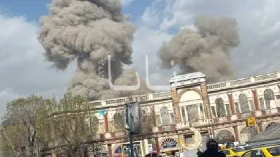

In a dramatic escalation of the ongoing regional conflict, Israel launched a series of “preventive attacks” against Iran on Saturday, February 28. The Israeli Defence Ministry confirmed the operation. The attacks have resulted in a state of emergency in Iran as the Israel Defence Forces prepare for an immediate and massive retaliatory strike.
In the last few minutes, sirens were sounded all throughout Israel, with an advance instruction alert directly to cellular devices to stay within proximity to protected spaces.
This is a proactive alert to prepare the public for the possibility of missiles being launched toward…
According to local sources in Iran, powerful explosions have been heard in the capital city of Tehran shortly after the operation was launched.
‘Removing threats’: Israel Katz announces the operation
The operation was announced and confirmed by Defence Minister Israel Katz. According to the minister, the operation was a necessary step for the country’s security.
“The State of Israel launched a pre-emptive attack against Iran to remove threats to the State of Israel,” Katz stated. Although the minister did not reveal details about the targets of the operation, the operation likely targeted Iran’s nuclear facilities and ballistic missile sites.
Following a situational assessment, it was determined that as of today (Saturday), at 08:00, immediate changes will be made to the Home Front Command Guidelines.
As part of the changes, it was decided to shift all areas of the country from Full Activity to Essential Activity.Nationwide lockdown: From ‘full’ to ‘essential’ activity
At the same time, air raid sirens were activated throughout Israel, but not because of an incoming attack; it was an anticipatory “red alert” to prepare civilians for an impending counter-attack.
The entire nation of Israel has been immediately downgraded from “Full Activity” to “Essential Activity” status by the IDF. As a result of these emergency guidelines:
- No educational activities are allowed.
- All workplaces are now closed, except those that are considered ‘essential.’
- Public gatherings are now prohibited.
According to social media guidelines by the IDF, “the guidelines are a proactive alert to prepare the public for the possibility of missiles being launched toward the State of Israel.”
A region on the brink: From June’s war to today
Today’s attack is the result of months of agonising tension and failed diplomacy. These nations were locked in combat for 12 days in June 2025, which marked the first direct American attack against Iranian nuclear facilities.
Although the U.S. and Iran have been in renewed negotiations throughout February 2026 to prevent a larger conflict, negotiations have been stalled on two issues that both countries have labelled as their “red line” issues:
The nuclear infrastructure: Israel has been demanding that a deal include the complete disarmament of Tehran’s nuclear infrastructure, as opposed to a halt in nuclear enrichment.
The missile program: Tehran has been indicating a willingness to negotiate a reduction in its nuclear program in return for sanctions relief, but it has been insisting that its ballistic missiles be taken out of the equation.
Bracing for the aftermath
As June 2025 still seems quite fresh in everyone’s minds when Tehran retaliated for a U.S.-Israeli strike by launching missiles towards the Al Udeid Air Base in Qatar, this preemptive strike appears to be even larger in scale, as Israel’s air defence systems, including the Arrow, David’s Sling, and Iron Dome systems, have been placed on high alert.