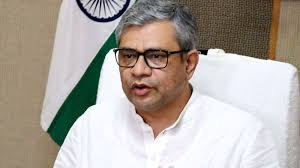

At what he called an “inflection point in the entire world of media,” Union Minister Ashwini Vaishnaw delivered a clear and uncompromising message to digital platforms on Thursday: content creators must receive a fair share of revenue, or legal mechanisms will step in.
Speaking at the DNPA Conclave 2026, Vaishnaw placed the revenue debate within a broader challenge facing modern media, the erosion of trust, the proliferation of synthetic content, and the shift of the internet from a neutral information highway to a potent, algorithm-driven media ecosystem.
Trust Under Threat: The Foundation of Society
Opening his address, Vaishnaw framed the current turmoil in media as a societal issue.
“The entire human society is built upon trust in institutions,” he said, citing family, judiciary, legislature, and media. “When that trust erodes, the very foundation of society begins to weaken.”
Moreover, he highlighted the role of deepfakes, disinformation, and AI-generated videos in undermining public confidence.
“Creating videos with absolutely no correlation to reality, generating synthetic content of respected personalities without consent, these are not small issues. They directly challenge societal trust,” he warned.
Platforms Can No Longer Claim Neutrality
In a striking statement, Vaishnaw challenged the long-standing notion that online platforms are mere neutral intermediaries.
“The nature of the internet has changed. It is no longer just an open-source exchange of information. It has become a powerful media outlet,” he said.
Also, using the analogy of a hotel manager verifying guests, he argued that platforms must now take responsibility for harmful, illegal, or algorithmically amplified content.
“Are they promoting fake content? causing harm to children? Are they inciting crimes? These are questions platforms must now answer,” he said.
Revenue Fair Share: “Rethink Policies or Face Legal Measures”
Vaishnaw’s remarks on revenue sharing drew widespread attention. Also, he stressed that platforms must ensure equitable compensation for all content creators, from established media houses to independent creators in remote areas.
“The platforms must also share revenue in a fair way with the people who are creating the content — whether it is news persons, conventional media, creators sitting in far-flung areas, influencers, professors or researchers,” he said.
Highlighting the historical role of intellectual property in societal progress, he warned:
“If original content is not fairly compensated, then the growth of science, technology, arts, and literature will get stunted.”
However, Vaishnaw urged platforms to voluntarily address the imbalance.
“I will request all the platforms to rethink your revenue sharing policies. If this is not done voluntarily, there are so many countries which have shown the path to get it done in a legal way.”
Observers see this as a signal that India could explore regulatory frameworks similar to those in other nations that require tech platforms to compensate news publishers for content usage.
Online Safety and Consent in the Age of Synthetic Media
Beyond revenue, Vaishnaw emphasized online safety, particularly for children and vulnerable users. Moreover, he called for stronger mechanisms against cyber fraud and cybercrime, mandatory consent before generating synthetic content, and greater accountability in algorithmic amplification.
“How can a video be generated of a well-known news anchor advertising a product without consent? That consent must be taken,” he said.
Moreover, he noted that oversight of platforms now extends beyond the executive branch, with courts and parliamentary committees scrutinizing the societal impact of digital media.
“The judiciary is concerned. The Parliamentary Committee has done extensive consultations and submitted a comprehensive report,” he added, urging stakeholders to examine these findings carefully.
A Turning Point for India’s Digital Ecosystem
Moreover, Vaishnaw framed the moment as decisive for the future of India’s media landscape.
“In such interesting times, it’s very important that whatever we decide today lays the foundation of tomorrow,” he said, highlighting the need for industry-wide consensus.
Also, his address signals a potential regulatory reset where revenue fairness, content accountability, and online safety may converge, reshaping the digital economy in India.
Also, for publishers and creators long frustrated by platform dominance and distorted revenue flows, Vaishnaw’s speech marks one of the clearest endorsements yet from the government on the need to rebalance digital economics, voluntarily if possible, legislatively if necessary.