
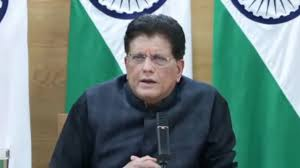

Union Commerce Minister Piyush Goyal assured that India will not extend import benefits to the United States on a wide range of agricultural products. Speaking to the media about the recently announced India-US trade agreement, Goyal emphasized that this decision reflects India’s self-sufficiency in agriculture and its commitment to safeguarding domestic farmers.
“The products excluded from import concessions include meat, poultry, dairy, soybeans, maize, rice, wheat, cereals, millets like jowar, bajra, and ragi, fruits, green tea, oilseeds, groundnuts, honey, non-alcoholic drinks, ethanol, and tobacco,” Goyal detailed during the press briefing.
This approach sets India apart from its other free-trade deals with countries like the European Union, the United Kingdom, and Australia, where broader concessions have been negotiated. Traditionally, India has shielded sensitive sectors such as dairy, rice, wheat, meat, cereals, GM foods, and soymeal from trade agreements due to their critical role in the country’s economy.
Opening New Doors for Indian Exporters
While protecting agriculture, the India-US trade agreement also promises significant opportunities for Indian businesses. Goyal highlighted that the pact would give Indian exporters access to a $30 trillion market, benefitting MSMEs, farmers, and fishermen alike.
He further elaborated that key Indian exports such as gems and diamonds, pharmaceuticals, and smartphones will continue to enjoy zero-duty status, allowing businesses to stay competitive in the US market. “There are numerous items that will attract zero duty now and in the future,” the minister added.
Agricultural Exports Get a Boost
The deal also includes zero reciprocal tariffs on several agricultural products, creating fresh opportunities for Indian farmers. Spices, tea, coffee and their derivatives, coconut and coconut oil, vegetable wax, areca nuts, Brazil nuts, cashews, chestnuts, and a variety of fruits and vegetables are expected to benefit from enhanced market access in the US.
Such expansion is expected to generate lakhs of new jobs, particularly for women and youth, offering both economic growth and employment opportunities across rural India.
A Balancing Act: Trade Growth Without Compromising Farmers
India’s approach underscores a delicate balancing act, opening global markets for exports while shielding sensitive domestic sectors that are vital for food security and rural livelihoods. Experts note that this strategy could set a model for future trade agreements, emphasizing selective liberalization rather than blanket concessions.