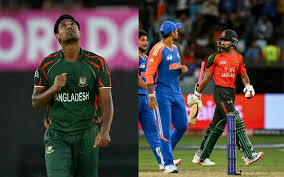

Bangladesh cricket’s uneasy relationship with Indian cricket has entered a critical phase. The Bangladesh Cricket Board has confirmed it is not communicating with the BCCI after requesting the ICC to move their T20 World Cup 2026 matches out of India. The flashpoint is the Mustafizur Rahman snub, which has turned an IPL decision into a full-blown global cricket governance issue. This matters because it places the ICC at the centre of a sensitive security, diplomacy, and tournament integrity debate just months before a marquee global event.
BCB president Aminul Islam made the board’s stance clear. Bangladesh will decide its next move only after receiving a response from the ICC. The board has already sent a formal letter outlining its concerns and has asked for direct talks with the global body.
According to Aminul, Bangladesh does not feel secure sending its team to India at this stage. He stressed that the clauses cited in the letter fall within ICC protocols and tournament operational frameworks.
The message was unambiguous. This is an ICC event, and all communication will remain with the ICC alone.
Mustafizur Rahman IPL Exit Adds Fuel to Fire
The controversy erupted after Mustafizur Rahman was released early from the Kolkata Knight Riders squad ahead of the IPL. The decision, taken under a BCCI directive, was perceived by the BCB as a trigger point that exposed deeper concerns around player treatment and safety.
While the IPL is a domestic competition, its overlap with international scheduling and player availability often carries diplomatic weight. In this case, it became the catalyst for Bangladesh’s T20 World Cup venue shift request.
Security Concerns Take Centre Stage
Aminul Islam revealed that the BCB board held multiple meetings before taking the call. The conclusion was unanimous. Player security remains the primary concern, independent of bilateral cricket relations.
He also dismissed speculation linking the issue to India’s potential reluctance to tour Bangladesh later this year. According to the BCB, bilateral series and World Cup participation are separate matters governed by different considerations.
This distinction is crucial as it frames the dispute as procedural rather than political.
IPL Broadcast Ban Signals Wider Tensions
A day after the ICC letter, Bangladesh’s government ordered broadcasters to stop airing the IPL. While Aminul described it as a sovereign decision, he acknowledged that the cricket board supports the move.
The development adds another layer to already strained India Bangladesh cricket relations. It also underlines how sport, governance, and state policy often intersect in South Asian cricket.
What Happens Next Depends on ICC
The ICC now faces a complex test of authority and crisis management. Any decision on venue changes could set a precedent for future tournaments hosted amid regional tensions. For Bangladesh, the message is consistent. Until the ICC responds, there will be no engagement with the BCCI and no clarity on participation in India-hosted matches. As the Mustafizur Rahman fallout continues to ripple, the T20 World Cup 2026 finds itself caught between sport and geopolitics.