
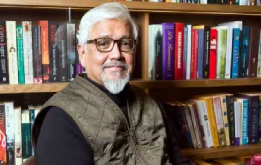

The Swedish Academy is set to announce the winner of the 2025 Nobel Prize in Literature on Thursday, ending months of speculation in the literary world. Among the frontrunners is Amitav Ghosh, one of India’s most prominent contemporary writers. If he wins, he would become the second Indian to receive the prestigious award, after Rabindranath Tagore, who won it in 1913 for his collection Gitanjali.
Tagore is the only Indian to have won the Nobel Prize in Literature so far, holding the title for over a century. Now, Amitav Ghosh, a Bengali like Tagore, has emerged as a strong contender for the 2025 award. Literary experts and readers have been discussing his chances widely, highlighting his distinctive focus on history, colonialism, and the environment.
Who is Amitav Ghosh?
Ghosh, born in Kolkata in 1956, studied at The Doon School, Dehradun, and earned a doctorate in social anthropology at the University of Oxford. He began his career working with news organisations before publishing his first novel, The Circle of Reason, in 1986. Over the years, he has written both fiction and non-fiction, with historical novels such as The Shadow Lines (1988), The Calcutta Chromosome (1996), The Glass Palace (2000), The Hungry Tide (2004), and Gun Island (2019).
Ghosh’s work often explores the effects of colonialism, the Opium Wars, and their contemporary impact, themes that have drawn attention from the Nobel committee. In addition, climate change is the central focus in his writing, and literary commentators noted that this year’s Nobel judges are particularly interested in works addressing environmental issues.
In December 2024, Ghosh was awarded the Erasmus Prize by the Praemium Erasmianum Foundation for his contribution to the theme “Imagining the Unthinkable,” which highlighted global crises such as climate change. The foundation praised his ability to make uncertain futures tangible through compelling storytelling about the past. Works like The Hungry Tide, The Great Derangement, The Ibis Trilogy, and The Nutmeg’s Curse were cited as examples of how he combines cultural insight with environmental awareness.
Ghosh has also won the Jnanpith Award, India’s highest literary honour, which reflects his significant contribution to contemporary literature. His unique blend of historical narrative, social commentary, and environmental concern has made him a respected figure both in India and internationally.
If Amitav Ghosh wins the 2025 Nobel Prize in Literature, he will join Rabindranath Tagore in history as only the second Indian to be honoured with the award.