
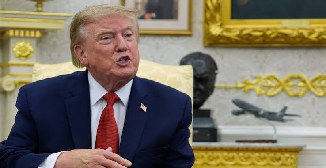

US President Donald Trump has declared an “Economic D-Day” against Iran, ordering unprecedented economic pressure and warning countries that support Tehran they could face severe financial consequences. Trump said the new campaign would target Iran’s main economic lifelines, including oil smuggling networks, financial transfers, exchange houses, ship registries and front companies. His warning comes as tensions remain high over the Strait of Hormuz.
Trump announces sweeping Iran economic pressure
Trump said Iran had failed to accept what he described as a major opportunity to reach a deal with the United States. He said Washington would now move towards economic warfare and isolation on a scale not seen before.
“Therefore, today, I am announcing the MOST CRUSHING ECONOMIC OPERATION EVER TAKEN AGAINST ANY COUNTRY!,” he said.
Trump also warned that the measures would not be limited to Iran. Countries, banks, businesses, airports and government bodies that provide support to Tehran could face what he called “TREMENDOUS Economic Consequences.”
- Oil smuggling networks
- Financial transfers and cash movements
- Exchange houses
- Ship registries
- Front companies
- Financial and business links supporting Iran
Strait of Hormuz remains key concern
The announcement comes amid a wider dispute over the Strait of Hormuz, a major route for global energy shipments. Trump said the waterway remains open and claimed that a US naval blockade had been highly effective. “Right now the Strait is open. A lot of boats are coming through,” he said.
Trump also said crude oil prices had remained below earlier predictions. He pointed to higher production from US states including Texas, Alaska and Louisiana as another reason he believes the global oil market can reduce its dependence on Hormuz.
What could Trump’s Iran sanctions mean for oil?
Any major disruption around the Strait of Hormuz could put pressure on global crude supplies because the waterway is an important energy transit route. Higher shipping risks, tighter sanctions and reduced Iranian oil exports could add volatility to crude prices.
Third-party countries could also face difficult choices. Businesses and financial institutions dealing with Iranian oil, money transfers or other trade could have to assess the risk of facing US penalties.
Trump says Iran will not get nuclear weapons
Trump also repeated his position that Iran must not acquire a nuclear weapon. “IRAN WILL NEVER HAVE A NUCLEAR WEAPON,” he said.
The US has indicated that negotiations with Tehran could resume if conditions change. However, reports cited in the source material said US negotiators had been asked to pause talks until Iran was ready to make a deal.
Iranian Parliament Speaker Mohammad Bagher Ghalibaf has said Tehran would not reopen the Strait of Hormuz until the US fulfils commitments linked to a 14-point memorandum, including lifting the blockade, releasing frozen Iranian assets and easing oil sanctions.
These latest events increase the pressure on the US, Iran, and oil-dependent nations. Whatever happens next will directly impact US-Iran relations, global oil prices, and international trade.