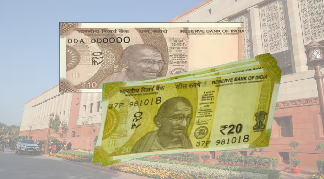

Rajya Sabha MP Neeraj Shekhar on Tuesday inquired about the timeframe regarding the introduction of the polymer currency notes, in Parliament. To which Minister of Finance Nirmala Sitharaman responds that the Government has approved the Reserve Bank of India’s (RBI) proposal to introduce one billion pieces each of Rs 10 and Rs 20 for trial and later for regular circulation in case the trial succeeds.
“The proposal has been approved by the government. As per the RBI, these polymer banknotes are proposed to be issued along with paper substrate-based banknotes,” she said.
The discussion took place after the RBI Governor Sanjay Malhotra, during last week’s Monetary Policy Committee (MPC) meeting, announced that the polymer currency would start circulating from the next financial year.
The Finance Minister also said “RBI has informed that the procurement process is presently at an initial stage. Therefore, at this point of time, it would not be possible to practicably determine the exact timeframe for introduction of polymer banknotes or the expenditure likely to be incurred thereon,”
The performance of the polymer currency will be observed under Indian climatic conditions and other infrastructure to determine whether to continue with the currency as it is or with changes.
If everything goes as planned, the polymer banknotes may roll out from the next financial year; however, no specific date or month has been allocated to the launch of the currency yet.
Polymer banknotes are made of a thin and flexible plastic substance which looks very much like traditional cotton-paper notes. However, they come with enhanced durability, enabling them to circulate for a longer period of time. They are more resistant to dirt, moisture, and wear, thus suffering less damage during everyday use.
The polymer currency is also difficult to counterfeit since it can easily incorporate see-through windows, micro-optic holograms, and specialized inks.
Rs 10 and Rs 20 notes undergo heavy circulation everyday; therefore, using them for the trial would determine the performance of the polymer currency under India’s economic, climatic, and infrastructural conditions.
This currency, however, would not replace traditional paper notes but would run alongside them with the possibility of lasting longer due to enhanced durability.